Global Architectural Whitepaper & Procurement Index

Top Trusted Aluminium Louvre Doors Factories & Supplier

Precision Engineering, Thermal Optimization, Wind-Load Resistance, and Sustainable Fenestration Solutions for Tier-1 Contractors and Global Developers

Precision Fenestration Lineup

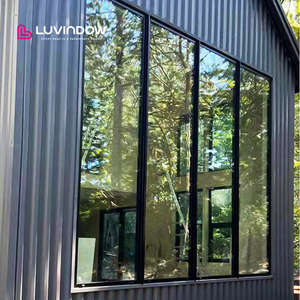
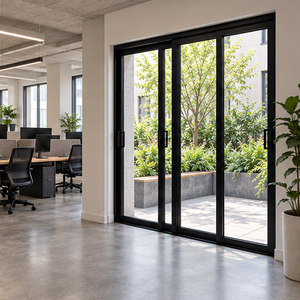
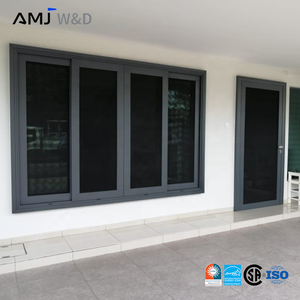
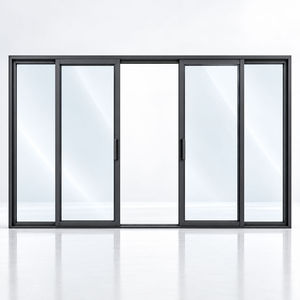
Featured Heavy-Duty Aluminium & Louvre-Integrated Systems

Factory-calibrated fenestration assemblies engineered in our 180,000 m² high-precision intelligent production center. Certified to AS2047, CE, NFRC, and ISO 9001 standards.

180,000m²

Dedicated Production Base

1,000,000m²+

Annual Fenestration Output

100+

National Patented Technologies

18,000+

Delivered Global Projects

Technical Whitepaper & Engineering Guide

Aluminium Louvre Doors: Structural Integrity & Architectural Aerodynamics

A deep-dive technical blueprint for architects, MEP consultants, and general contractors selecting premium ventilation and shading systems under aggressive climatic conditions.

Continuous Airflow & Free Area Optimization

Industrial aluminium louvre assemblies demand precise aerodynamic balancing. Standard 45° chevron or Z-shaped extruded blades must balance Free Vent Area (typically calibrated between 42% and 58%) against rain penetration. By utilizing multi-stage water traps and integral internal gutters, our louvered doors prevent water ingress up to dynamic pressures of 300 Pa while maintaining air exchange rates that significantly lower mechanical HVAC dependence in tropical and desert environments.

Alloy Extrusion & Anti-Corrosion PVDF

Base profile integrity depends strictly on primary 6063-T5 or 6063-T6 architectural aluminium billets with controlled magnesium-to-silicon ratios to eliminate intergranular stress cracking. For marine and coastal environments (such as Lagos, Mombasa, Durban, or Middle Eastern seaboards), systems undergo 3-coat/2-bake fluorocarbon (PVDF) electrostatic coatings compliant with Qualicoat Class 2 and AAMA 2605, resisting over 4,000 hours of continuous neutral salt spray without chalking or blistering.

Patented Anti-Theft Multi-Point Integration

Traditional louvre door installations are vulnerable to blade prying. Dejiyoupin integrates our proprietary Four-Side Six-Point Lock invention patent alongside concealed heavy-duty stainless steel hinge pins and hardened internal interlocking rods. This design distributes structural force across the perimeter jamb during attempted forced entry, achieving EN 1627 RC2/RC3 burglar-resistance ratings while preserving louvered functionality.

Architectural Engineering Note: Thermal Transmittance & Acoustic Bridging

Where louvre doors divide interior air-conditioned spaces from utility or plant zones, hybrid designs incorporating thermal break technology (using glass-fiber reinforced polyamide PA66 strips) decouple the exterior from the interior profile. Combined with acoustic damping foam inserts inside hollow extrusion louvre blades, this assembly achieves acoustic attenuation up to 34 dB Rw while preventing cold-bridge condensation in extreme differential temperature zones.

Market Foresight 2026-2030

Global Procurement & Engineering Evolution of Louvre Systems

How international green building codes, automation, and supply chain rationalization are transforming architectural door specifications worldwide.

Evaluation Parameter Legacy Sourcing Paradigm Next-Generation Architectural Specification Impact on Developers & Asset ROI
Thermal & Acoustic Isolation Single-skin cold-drawn blades; raw uninsulated profile junctions; non-sealed frames. Polyamide thermal breaks (PA66); hollow-core acoustic-insulated louvre profiles; perimeter EPDM double gasket seals. Reduces overall envelope HVAC operational expenses by 18-24%; complies with LEED Gold & SANS 10400-XA standards.
Actuation & Automation Purely manual levers; fixed-pitch louvre blades with no integration. Concealed DC 24V linear actuators integrated into Building Management Systems (BMS); dynamic wind/rain sensor trigger arrays. Enables automated night purging, dynamic natural ventilation, and smoke extraction conformity (EN 12101-2).
Supply Chain Integrity Decentralized sourcing: extrusions, coatings, and fabrication across disparate workshops. Unified 180,000 m² vertical production base: integrated billet extrusion, automated machining, testing, and pre-assembly. Eliminates on-site installation tolerances; prevents project delay penalties with zero-error containerized sequencing.
Security Calibration Padlock plates or basic single-point latches; easily bypassed blade fasteners. Patented Four-Side Six-Point locking systems with internal tamper-proof concealed drive transmissions. Replaces secondary security grilles; preserves aesthetic minimalism while lowering insurance and perimeter defense risk.
The Manufacturer Behind the Standard

Guangdong Dejiyoupin: 25+ Years of Zero-Error Engineering

Headquartered in Shenke Chuangzhi Park, Shishan Town, Nanhai District, Foshan—the world's capital of aluminium production. We turn complex fenestration shop drawings into container-ready architectural hardware.

Unmatched Production Capacity

With an expansive 180,000 m² production base, 600+ specialized technicians, and an annual capacity exceeding 1,000,000 m², we guarantee project delivery timelines for large-scale resorts, urban residential districts, and institutional headquarters worldwide.

R&D Mastery & 100+ Patents

Our dedicated engineering center is staffed by 30+ senior fenestration specialists. Holding more than 100 patents—including our benchmark Four-Side Six-Point Anti-Theft Lock—we develop custom dies and tailored structural extrusions for custom projects.

Accreditation Grand Slam

Our products undergo comprehensive independent testing by global labs, earning CE (Europe), NFRC (North America), AS2047 (Australia), CSA (Canada), Energy Star, and ISO 9001 certifications, recognized by Xinhua News Agency as a "China Famous Brand."

Engineered for Hostile Climates

From the corrosive saline mist of coastal ports like Durban, Lagos, and Mombasa to the high UV indices and abrasive dust of desert locales, our PVDF-finished louvres and thermal systems maintain structural stability under wind loads exceeding 3500 Pa.

8-Stage Quality Assurance Cycle

Every fenestration batch follows our strict 8-step process: Architectural Drawing Review, System Profiling, Technical Proposals, Mockup Finalization, Automated CNC Machining, Site Sizing Verification, 360° Factory QC, and Container Sequencing Guidance.

Complete Port-to-Site Logistics

We provide full documentation and compliance clearances (SONCAP, PVoC, CE CoC) along with heavy-duty export packaging (vacuum wrap, corner guards, reinforced plywood crates), ensuring components arrive at international ports ready for fast installation.

Procurement Intelligence

Frequently Asked Questions on Aluminium Louvre Doors

Direct, highly-detailed technical clarity for procurement officers, lead architects, and commercial developers assessing factory-direct fabrication.

How do high-performance aluminium louvre doors prevent rain ingress during high wind events?
Weatherproofing in engineered louvre systems relies on blade geometry and internal pressure management rather than simple overlap. We fabricate blades with specialized two-stage water baffles and double-lip catches that intercept wind-driven rain. Water droplets lose velocity inside the internal cavity, drop into an integrated sill drain channel, and evacuate via one-way weep valves. Tested according to ASTM E331 and EN 12208, our assemblies maintain water-tight performance under simulated storm pressures exceeding 300 to 450 Pa.
What is the difference between fixed blade louvre doors and operable adjustable louvre systems?
Fixed blade systems utilize mechanically joined or fully welded 45°/60° louvres to deliver constant baseline airflow, ideal for transformer rooms, MEP enclosures, and utility spaces. Operable louvre systems feature concealed rotational drive bars linked to manual crank regulators or motorized 24V DC actuators. Operable systems allow occupants to seal the room against sandstorms, heavy rains, or cold nights, and can integrate with fire control setups to automatically close or open for smoke venting.
How does Dejiyoupin protect aluminium profiles against coastal corrosion near seawater?
Near maritime coastlines (e.g., Mombasa, Lagos, or Durban), atmospheric chlorides rapidly degrade untreated aluminium. Dejiyoupin utilizes primary 6063-T5 extrusions pre-treated through a multi-stage non-chromate acid conversion process. Profiles then receive a 70% fluoropolymer resin (PVDF) coating under AAMA 2605 guidelines or a Class 2 super-durable architectural powder coating (60–80 μm). Fasteners, linkage axles, and pivot hardware are made from marine-grade 304 or 316 stainless steel to eliminate galvanic corrosion.
Can aluminium louvre doors achieve meaningful acoustic isolation and thermal separation?
While basic single-wall louvre doors allow sound and thermal bleed, our advanced configurations bridge this gap. We produce dual-cavity airfoil louvre blades packed with high-density hydrophobic acoustic mineral wool. When closed against dual-perimeter EPDM bulb gaskets within a thermal-break polyamide outer frame, our hybrid louvre doors achieve an acoustic reduction up to 34 dB Rw and a thermal transmittance value (U-value) down to 2.2 W/m²K, making them suitable for commercial hotel plant rooms and luxury villas.
What technical documentation is required before the factory can issue a formal structural quote?
To provide a fully-engineered proposal, our team requires: (1) Architectural opening schedules indicating structural wall-to-wall dimensions; (2) Performance specifications detailing local wind load requirements (in kPa or m/s), required free ventilation area percentage (%), and acoustic/thermal targets; (3) Preferred surface treatment and color code (RAL or custom sample); and (4) Hardware configuration, including lock requirements (such as our Four-Side Six-Point anti-theft lock) or automated BMS actuators.
How does the factory prevent dimensional errors and packaging damage during long-distance transit?
We adhere to a Zero-Error Manufacturing protocol where every finished frame undergoes precision dry-assembly and laser verification in our Foshan workshop prior to final approval. For international transport, frames and leaves are wrapped with electro-static protective film, corner-guarded with high-density buffer blocks, and crated into fumigated solid-plywood marine cases with desiccants. We pack by floor and elevation schedules, so your job site can unload directly to designated installation areas.

Request a Technical Bid for Your Next Project

Collaborate with Guangdong Dejiyoupin's engineering division. Send your opening schedules, wind load criteria, or project drawings for a detailed production blueprint and cost estimate within 24 hours.