Why are architectural aluminum entry doors preferred over solid wood or hollow steel?
Aluminum entry doors engineered with 6063-T5 or 6063-T6 virgin extrusions deliver structural tensile yield strength superior to standard cold-rolled steel while remaining completely immune to rotting, termite attack, dimensional swelling, or warping common to timber. While wood fluctuates up to 5-8% in volume depending on ambient relative humidity, precision-extruded aluminum maintains nominal tolerances below 0.5mm across extreme temperatures (-40°C to +80°C). Furthermore, when upgraded with polyamide thermal breaks and PVDF exterior coatings, aluminum delivers superior insulation, minimal upkeep, and a lifespan exceeding 35 years.
How do thermal break systems prevent heat transfer and interior condensation?
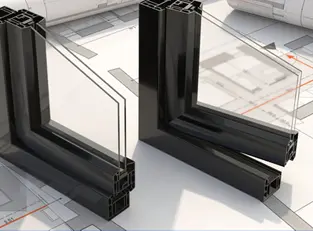
Aluminum has high inherent thermal conductivity. To prevent unwanted heat gain in tropical/equatorial zones or heat loss in cold northern climates, Guangdong Dejiyoupin Doors and Windows Co., Ltd. incorporates low-conductive Polyamide (PA66 reinforced with 25% glass fiber) thermal barriers structurally crimped between the interior and exterior aluminum extrusions. This breaks the conductive thermal circuit, stopping exterior thermal energy from migrating indoors. Combined with multi-layer hollow argon-filled Low-E insulated glass units (IGUs) and continuous EPDM automotive-grade compression gaskets, our entrance assemblies effectively lower total frame U-factors to 1.1–1.4 W/(m²·K), preventing condensation and mold while dramatically cutting building HVAC operational costs.
What makes the patented Four-Side Six-Point lock superior to traditional commercial locks?
Conventional entry doors rely on one or two locking latch points situated along the active handle jamb, leaving the top, bottom, and hinge sides vulnerable to forced leverage using crowbars or hydraulic spreaders. Our proprietary Four-Side Six-Point locking invention patent simultaneously drives heavy-duty hardened stainless-steel shoot bolts and mushroom anti-pry cams deep into reinforced structural pockets along all four outer perimeters (top head, bottom threshold, active stile, and rear hinge stile). This achieves PAS 24 and European RC3/RC4 forced-entry resistance classification, distributing structural load dynamically to resist up to 15 kN of perpendicular static force.
Can aluminum entry doors endure coastal sea spray without pitting or chalking?
Yes. For oceanfront villas and maritime commercial complexes located in coastal regions (such as Lagos, Mombasa, Durban, Dubai, Miami, or Sydney), standard electrostatic powder coatings deteriorate due to chloride-induced electrolytic corrosion. Guangdong Dejiyoupin Doors and Windows Co., Ltd. applies industrial-grade Polyvinylidene Fluoride (PVDF/fluorocarbon) coatings containing a minimum of 70% Kynar 500 / Hylar 5000 resins, or specialized architectural Class 3 Qualicoat marine-grade finishes. These undergo rigorous 4000-hour continuous neutral and acidified salt-spray tests (ASTM B117) to guarantee zero filiform oxidation, blistering, peeling, or color fading across 30 years.
What are the maximum structural dimensions available for oversized pivot entrance doors?
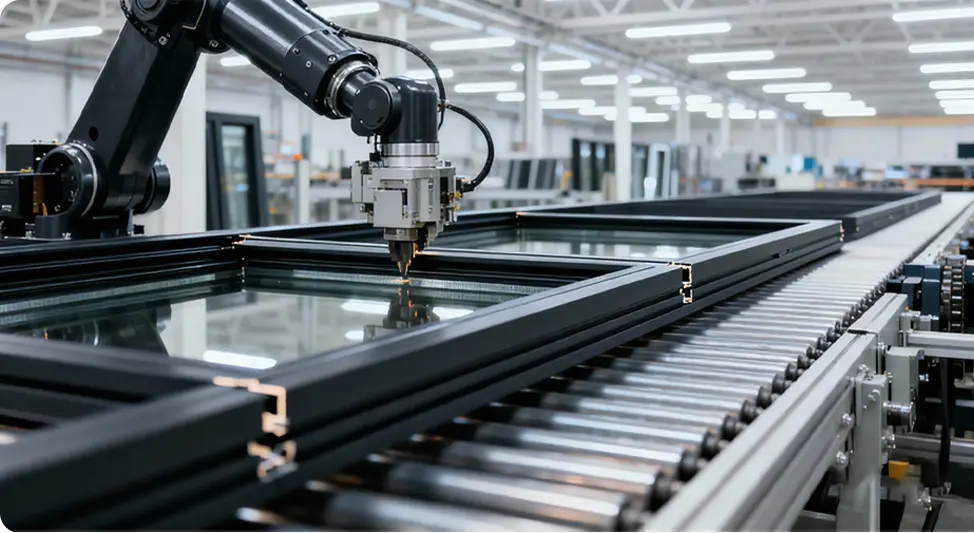
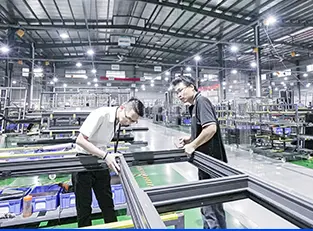
Through our state-of-the-art intelligent manufacturing facility, we engineer architectural pivot doors with single-leaf clear spans measuring up to 2500mm in width and 4500mm in continuous unjointed height, bearing sash weights upwards of 600 kg. These monumental proportions are achieved through internal structural carbon-steel reinforcing tubes, aerospace-grade corner crimping brackets, and precision concealed hydraulic floor-box pivots. Our assemblies provide adjustable soft-close damping, 90° hold-open functionality, and integrated sub-sill perimeter drainage channels.
What export certifications accompany your factory-direct shipments?
Every container dispatched from our Guangdong factory is backed by comprehensive, internationally recognized certification and compliance documentation. This includes CE Marking according to European EN 14351-1, USA National Fenestration Rating Council (NFRC) thermal ratings, Australian AS2047 fenestration testing, Canadian Standards Association (CSA) approval, Energy Star verification, and strict ISO 9001:2015 quality control systems. Furthermore, for cross-border clearance in Africa and worldwide, we provide fully verified SONCAP, PVoC, SABS, and SASO clearance conformity documentation.