● Global Fenestration Engineering • E-E-A-T Certified Whitepaper

Top China Aluminum Storm Doors Manufacturers & Supplier

Precision 6060-T66 Architectural Extrusions, Hurricane-Impact Structural Integrity, and Direct Factory Supply Chains for Commercial and Luxury Residential Developments.

180,000m²
Foshan Intelligent Base
1,000,000+
Annual Capacity (m²)
100+
Patents & Global Certs
18,000+
Projects Delivered Worldwide
Precision Fenestration Portfolio

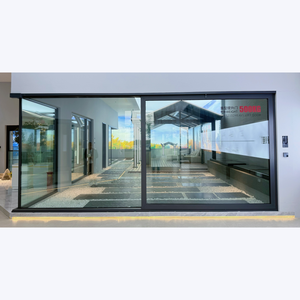
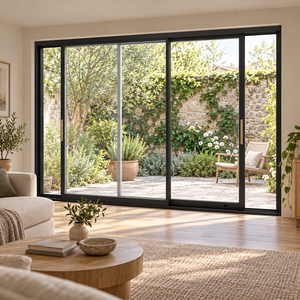
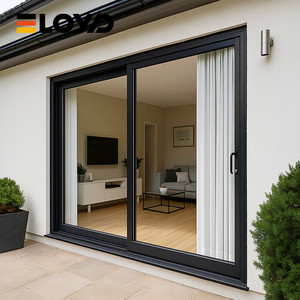
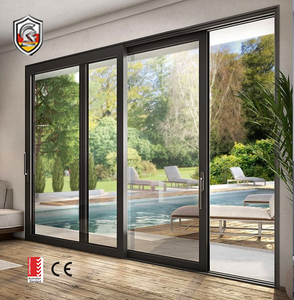
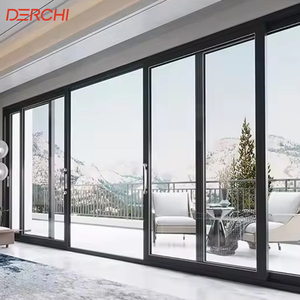
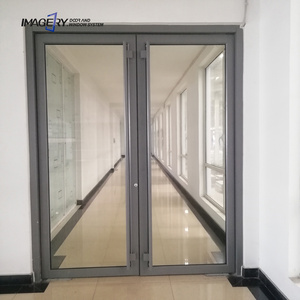
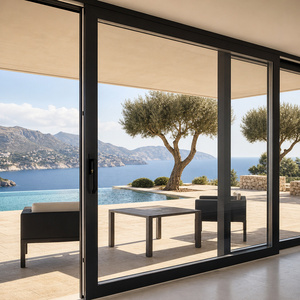
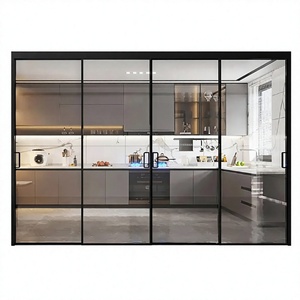
Engineered Heavy-Duty Aluminum Storm, Lift & Slide Systems

Engineered to exceed TAS 201/202/203 missile impact standards and SANS 10400-XA thermal regulations. Every assembly incorporates CNC-milled structural cores and German dual-seal assemblies.

Engineering Specification Deep-Dive

Why Chinese Architectural Storm Doors Lead Global Infrastructure

Evaluating structural alloy integrity, impact resistance, and surface longevity in accordance with ASTM E1886/E1996, AS2047, and EN 12210 criteria.

6060-T66 vs. Standard Alloys

While residential markets often accept commercial 6063-T5 aluminum, high-wind storm defense demands artificial heat-treated 6060-T66 architectural grade extrusions. Delivering a yield strength exceeding 160 MPa and ultimate tensile strength above 215 MPa, these profiles withstand extreme cyclical deflection without structural memory distortion during sustained typhoon-force buffeting.

Laminated Glass & PVB Interlayers

Storm and hurricane certification dictates composite glazed units composed of dual fully tempered lites bonded with structural PVB or SentryGlas (SGP) interlayers up to 1.52mm thickness. Even if outer panes shatter under large-missile impacts (9-lb 2x4 lumber traveling at 50 ft/s), the elastomeric matrix remains anchored to the frame, sustaining pressure integrity.

Perimeter EPDM Multistage Seals

Conventional neoprene or brush sweeps break down rapidly under ultraviolet index extremes. Premium China storm door manufacturers utilize co-extruded cellular vulcanized EPDM automotive-grade gaskets paired with secondary magnetic or finned nylon seals. This creates continuous air-tight compression barriers tested to minimize air leakage down to ≤ 0.1 m³/(h·m).

Performance Characteristic Standard Commercial Grade DERCHI Heavy-Duty Storm Specification International Standard Baseline
Alloy Composition 6063-T5 (Wall thickness 1.2 - 1.4mm) 6060-T66 / 6063-T6 (Wall thickness 2.0 - 3.0mm) ASTM B221 / GB 5237
Wind Pressure Resistance Class 3 (1500 Pa / ~110 km/h) Class 9 (≥ 5000 Pa / ~320 km/h Hurricane Grade) ASTM E330 / AS 4055 / EN 12210
Water Penetration Defense Class 2 (250 Pa) Class E (≥ 1000 Pa Sub-Floor Drain System) AAMA 501.1 / EN 12208
Corrosion Resistance Surface Standard Anodized (10-15 μm) AkzoNobel Fluorocarbon PVDF / Powder (40-80 μm) AAMA 2605 (3,000 Hr Salt Spray)
Security Mechanism Single/Double-point lock latch Four-Side Six-Point Lock Invention Patent PAS 24 / EN 1627 RC3 Anti-Theft
The Manufacturer Advantage

Precision Foshan Manufacturing: Zero-Error Philosophy

Over 25 years of specialized door and window manufacturing from Nanhai, Foshan—the global powerhouse of industrial aluminum extrusions.

Massive Production Scale

Our 180,000 m² state-of-the-art facility deploys automated CNC sawing centers, robotic corner-crimping equipment, and 360° multi-tier visual inspection tracks. Backed by 600+ personnel and 30+ senior fenestration engineers, we produce over 1,000,000 m² annually without compromising on precision tolerances.

Patented Anti-Theft Defense

Holding over 100 national invention patents, including our signature Four-Side Six-Point Lock system. This patented multi-directional locking mechanism drives hardened steel deadbolts directly into reinforced frame anchors across top, bottom, and lateral frame stiles, completely thwarting pry-bar and forced intrusion attacks.

Global Regulatory Accreditations

Recognized as a "China Famous Brand" by Xinhua News Agency, DERCHI maintains compliance with international building codes. Our units hold CE (European Union), NFRC & Energy Star (USA), AS2047 (Australia), CSA (Canada), and ISO 9001 certifications, enabling effortless municipal approvals for developers worldwide.

Market Foresight • 2026-2030

Strategic Procurement & Engineering Development Trends

How global climate volatility, net-zero carbon standards, and automated fabrication are shifting B2B aluminum door procurement over the coming decade.

Extreme Weather Resiliency & Super-Sizing

Procurement requirements are rapidly shifting toward ultra-wide scenic glass panels exceeding 3.5 meters in height without compromising deflection safety. Hurricane-impact specifications once reserved solely for Florida and the Caribbean are now standard RFQ baselines for coastal African, Southeast Asian, and Middle Eastern mega-developments facing unprecedented wind speeds.

Circular Aluminum & Low-Carbon Footprint

Global contractors operating under LEED and BREEAM certifications demand documented Environmental Product Declarations (EPDs). Forward-thinking Chinese manufacturers utilize hydro-powered smelter aluminum billets with recycled alloy contents above 35%, cutting embedded emissions while preserving metallurgical ductility and structural tensile ratings.

BIM-Driven Factory-to-Site Customization

The era of generic stock sizes is obsolete. Modern procurement hinges on end-to-end BIM (Building Information Modeling) integrations. Structural opening dimensions pass directly from architectural Revit models to factory CNC milling saws, producing zero-tolerance pre-hung assemblies tagged specifically by floor, opening, and crane delivery schedules.

Procurement Intelligence

Frequently Asked Questions for B2B Importers & Contractors

Direct technical and commercial answers addressing tariff risks, marine packing standards, warranty verification, and field performance.

How do Chinese storm doors achieve authentic hurricane and impact certifications?
Compliance is verified through destructive physical testing in accredited international laboratories (e.g., Intertek, TÜV). The door undergoes TAS 201 large-missile impact testing (firing an 8-foot 2x4 timber missile at 34 mph), followed immediately by TAS 202/203 cyclical pressure tests (up to 9,000 positive and negative pressure pulses). Only door assemblies with reinforced alloy cores, multi-point lock matrices, and laminated glass retain intact structural hermetic boundaries to receive full CE, AS2047, and Hurricane certifications.
What measures prevent electrolytic galvanic corrosion on coastal installations?
In harsh marine atmospheres like Lagos, Mombasa, Durban, or Miami, coastal salt fog degrades substandard hardware within months. We isolate dissimilar metals by applying dielectric EPDM barriers between fasteners and structural extrusions. All structural fasteners are upgraded to Austenitic 316-grade stainless steel, while aluminum profiles undergo a multi-stage pre-treatment followed by 70% fluoropolymer PVDF (Kynar 500) or Class 2 Qualicoat powder coatings carrying a minimum 3,000-hour salt spray certification.
How does the factory prevent glass and extrusion damage across long maritime transit?
Our multi-tier export packaging eliminates transit friction. Every aluminum surface is wrapped in non-residue static protective film, corners are shielded by heavy-gauge HDPE buffers, and sashes are encased in customized closed-cell EPE foam. Complete door sets are packed vertically into fumigated ISPM-15 compliant solid plywood crates equipped with desiccant packs to prevent condensation and moisture bloom during cross-equatorial ocean shipping.
What documentation is required to clear customs in North America, Europe, and Africa?
Beyond standard commercial invoices, packing lists, and sea bills of lading, we supply specialized compliance paperwork based on destination: SONCAP (Nigeria), PVoC/CoC (Kenya and Ghana), CE Declarations of Performance (EU), and NFRC thermal simulation certifications (USA). Our project logistics division coordinates with regional clearing agents to verify HS code classification (typically 7610.10) and manage import compliance seamlessly.
What is the standard production lead time for fully customized architectural storm orders?
Upon final sign-off of shop drawings and hardware specifications, typical manufacturing lead time ranges from 25 to 35 calendar days for standard powder coat finishes (matte black, architectural bronze, white). Custom RAL color matching, dual-color thermal extrusions, or architectural PVDF finishes typically require 35 to 45 days, followed by direct container consolidation and dispatch from Foshan, Shenzhen, or Guangzhou ports.
Can your technical engineering team provide installation support for overseas contractors?
Yes. Every project includes comprehensive exploded-assembly CAD blueprints, anchorage load calculations, and sequential installation video guides. For commercial developments, high-end hotels, and multi-unit residential communities, DERCHI can dispatch bilingual senior installation supervisors directly to the job site to train local framing and glazing crews, ensuring waterproof and airtight structural integration.

Request Factory-Direct Pricing & Engineering Consultation

Provide your architectural schedule, rough opening dimensions, or CAD elevations. Our fenestration engineering specialists will calculate wind load requirements and generate a detailed B2B quotation within 24 hours.