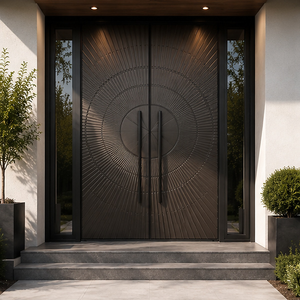
Precision Engineering Portfolio
Engineered Architectural Solutions & System Fenestration
Explore our flagship hybrid structural systems, fire-rated security entrances, hurricane-tested multi-slide doors, and high-performance exterior solutions manufactured in Foshan, China under ISO 9001 and international NFRC/CE protocols.
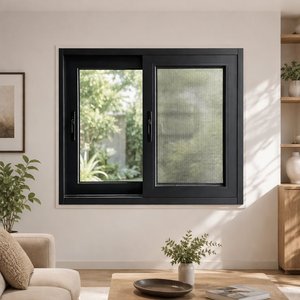
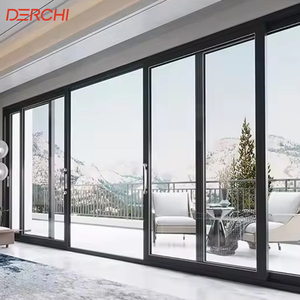
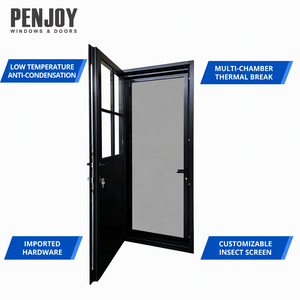
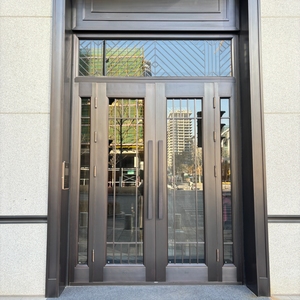
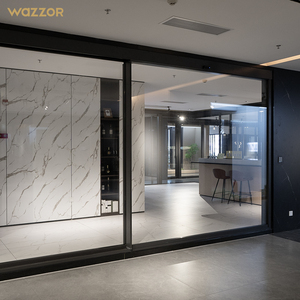
180,000 m²
Modern Production Base
18,000+
Global Completed Projects
100+
Proprietary National Patents
$435M+
Annual Turnover Milestone
Industry Insight & Engineering Synthesis
The Mechanics of High-Performance Aluminum Clad Wood Windows
When specifying building envelope solutions for ultra-luxury residential developments, historic retrofits, and high-exposure coastal villas, the hybrid composite configuration known as Aluminum Clad Wood (Alu-Clad Wood) represents the pinnacle of hydrothermal performance, architectural luxury, and external weather deflection.
1. Dual-Core Structural Symbiosis
Aluminum clad wood fenestration is fundamentally distinct from basic surface-laminated timber or vinyl profiles. It leverages an advanced mechanical floating clip system that binds an interior solid structural timber core—typically slow-grown laminated Pine, Oak, or Meranti—to an exterior extruded architectural aluminum shell (alloy 6063-T5 or 6063-T6).
The Coefficient of Thermal Expansion (CTE) Differential
Because aluminum and timber expand at radically different rates (aluminum at ~23 × 10⁻⁶ /K, solid wood longitudinally at ~3–5 × 10⁻⁶ /K), rigid permanent bonding causes buckling, glass seal shear, or frame warping over cyclical season shifts. Engineering leaders utilize non-conductive sliding polymer fasteners (POM / nylon clips) creating an intentional 4mm to 8mm expansion gap that facilitates autonomous micro-movement and continuous pressure-equalized rear cavity ventilation.
Condensation Evacuation and Capillary Breaks
The internal perimeter of the aluminum shell features integrated weep channels. Any ambient vapor penetrating the primary exterior EPDM gasket encounters a secondary drainage chamber and drains out at the sill threshold, preventing long-term rot, fungal decay, and fungal spore formation inside the interior millwork.
2. Hydrothermal Envelope & Acoustic Physics
In hot desert conditions, heavy monsoon zones, or harsh Nordic winters, thermal conductivity is the critical metric separating budget suppliers from tier-one manufacturers. Solid timber possesses an inherently low thermal conductivity (k ≈ 0.12 W/m·K), providing a total thermal break that prevents internal sweating and cold bridging.
Whole-Window U-Factor Calculations
When combined with warm-edge composite spacers (such as Technoform or Swisspacer) and triple-pane low-emissivity (Low-E) double-argon insulated glass units (IGUs), aluminum clad wood assemblies easily reach whole-unit thermal values of Uw ≤ 0.78 to 0.95 W/m²·K (U-Factor 0.14 – 0.17 Btu/h·ft²·°F), satisfying stringent German Passivhaus criteria and North American Energy Star Zone 4 codes.
Sound Transmission Class (STC) & Outdoor-Indoor Transmission (OITC)
The dense fibrous cellular grain of laminated solid timber naturally absorbs lower vibrational frequencies (such as highway rumble and industrial rumble), while asymmetrical acoustic laminated glazing packages (e.g., 6mm tempered + 0.76mm PVB + 4mm float + 16Ar + 6mm low-E) shatter high-frequency pressure waves, driving overall sound attenuation ratings beyond STC 42–46 dB.
Global Supply Chain Audit
Benchmarking the Top 10 Aluminum Clad Wood Window Manufacturers
Strategic global project procurement requires transparent competitive comparisons. Below is an engineering evaluation comparing the world's leading aluminum clad wood producers across manufacturing scale, customization flexibility, lead-time velocity, and wholesale pricing efficiency.
| Manufacturer / Brand | Primary HQ | Core Structural Specialization | Certification Portfolio | B2B Sourcing Advantage |
|---|---|---|---|---|
| DERCHI (Guangdong Dejiyoupin) | Foshan, China | 180,000m² Intelligent Base, Heavy Hybrid Systems, Smart-Hardware | CE, NFRC, AS2047, CSA, Energy Star, ISO 9001 | Direct factory container consolidation, custom milling, >45% cost efficiency vs EU/US |
| Internorm International | Traun, Austria | Ultra-Low Energy Passivhaus I-tec Glazing, Composite Cladding | CE, Passivhaus Institut, RAL, Minergie | Premium European residential benchmark; exceptional U-value execution |
| Marvin Windows & Doors | Warroad, USA | Extruded Aluminum Exterior, Douglas Fir/Pine Interior Core | AAMA, WDMA, NFRC, Energy Star | Extensive North American dealer matrix, legacy traditional architectural detailing |
| Andersen Windows (A-Series) | Bayport, USA | Wood core protected by fiberglass/aluminum architectural cladding | NFRC, Hallmark Certified, CSA | Massive regional distribution; standardized modular opening dimensions |
| Pella Corporation | Pella, USA | EnduraClad aluminum exterior, integrated between-the-glass blinds | NFRC, AAMA, Florida Product Approval | High national brand equity; turn-key residential tract packaging |
| Unilux GmbH | Salmtal, Germany | Precision engineered German timber with thermo-shield exterior alu | DIN EN ISO, CE, RAL Quality Mark | Robust engineered joinery, advanced multi-point hardware automation |
| Katzbeck Fenstersysteme | Rudersdorf, Austria | Clean-edge contemporary timber-aluminum systems, larch & oak | Passivhaus, CE, PEFC Sustainable Forestry | Specialized architectural focus for high-end central European villas |
| Loewen Inc. | Steinbach, Canada | Coastal Douglas Fir framework with heavy extruded aluminum shell | NFRC, AAMA, CSA, Miami-Dade NOA | Tough cold-climate resilience, severe hurricane windstorm approvals |
| Rationel Windows (VKR Group) | Herning, Denmark | Scandinavian slim-profile composite timber-alu minimalist frames | CE, Secured by Design, BFRC | Architectural daylight optimization; ultra-slim sightlines |
| NorDan Group | Moi, Norway | High-security powder-coated alu shell on vacuum-impregnated timber | CE, NDVK, British Standard Kitemark | Extreme weather durability, harsh North Atlantic maritime resistance |
Procurement Forecasting
Strategic Procurement Trends for 2026–2030
Commercial developers, general contractors, and speculative luxury builders are altering how they specify and procure exterior envelopes. Four macro factors are driving global direct-source manufacturing pipelines.
1. Factory-Direct Container Consolidation
Developers are eliminating domestic supply chain layers. Sourcing directly from tier-one Foshan manufacturing parks cuts procurement costs by 30% to 50% while unlocking bespoke custom profiles, exact rough opening adaptation, and coordinated whole-building delivery schedules.
2. Multi-Threat Coastal Certification
Extreme climate events demand dual-rated performance. Procurement packages increasingly mandate combined NFRC thermal certification and Miami-Dade / Florida Building Code NOA impact ratings, ensuring laminated SentryGlas® interlayers survive cyclonic debris.
3. IoT Hardware & Integrated Security
The convergence of architectural fenestration and home automation has made concealed multi-point smart mortise locks, motorized sash drives, and embedded biometric access essential specifications for villa developments and luxury boutique hotels.
Material Science & R&D
The Technological Evolution of Next-Generation Fenestration
Continuous innovation at our 180,000 m² R&D hub is addressing the historic vulnerability factors of exterior timber systems through material science, robotic finishing, and vacuum metallurgy.
Acetylated & Vacuum-Stabilized Timber
Applying acetylation (e.g., Accoya® technology) to core profiles modifies wood cell hydroxyl groups into acetyl groups. This slashes water absorption by 80%, virtually eliminates swelling and shrinking, and provides Class 1 durability without chemical leaching.
Fluorocarbon PVDF Architectural Coating
Our aluminum cladding utilizes automated multi-coat Kynar 500® PVDF resin finishes. This surpasses AAMA 2605 requirements, withstanding 10,000+ hours of continuous salt-spray testing to resist chalking and UV erosion in maritime and desert environments.
Vacuum Insulated Glass (VIG) Integration
Replacing standard gas-filled cavities with slim 8.3mm tempered Vacuum Insulated Glass eliminates internal convective transfer. Units reach center-of-glass thermal values of Ug = 0.45 W/m²·K (R-14) while trimming frame profile thickness and total sash weight.
Manufacturing Dominance
Why Global Specifiers Partner with DERCHI
With more than 25 years of specialized fenestration manufacturing in Shishan Town, Nanhai District, Foshan, Guangdong Dejiyoupin Doors and Windows Co., Ltd. delivers institutional manufacturing security for large-scale international projects.
180,000 m² Heavy Manufacturing Hub
Operated by over 600 skilled technicians and 30 dedicated R&D engineers, our facility produces more than 1,000,000 m² of precision systems annually, guaranteeing lead times even on multi-tower commercial developments.
International Certification Grand Slam
Fully compliant with global building codes. Our units hold official testing credentials including CE (EU), NFRC (USA), AS2047 (Australia), CSA (Canada), Energy Star, and ISO 9001 quality management verification.
Patented Anti-Intrusion Systems
We hold more than 100 proprietary national patents, highlighted by our Four-Side Six-Point Lock invention patent. This provides multi-axis perimeter dead-locking that defeats pry-bar intrusions and handles high negative wind pressure.
Procurement Direct Answers
Frequently Asked Questions for B2B Sourcing
Direct technical, logistical, and commercial answers for developers, architects, and quantity surveyors evaluating factory-direct window partnerships.
How does aluminum clad wood outperform standard thermal break aluminum?
While thermal-break aluminum relies on 24mm to 34mm polyamide (PA66) insulation strips to split exterior and interior metal, the interior face is still cool alloy. Aluminum clad wood introduces a 68mm to 86mm solid timber mass across the interior frame. This provides a natural thermal break, prevents interior radiant cooling, controls acoustic reverberation, and delivers a warm architectural timber aesthetic without exposing the wood to exterior sunlight or rain.
Can your factory accommodate customized sizes, angles, and finishes?
Yes. Every production run is custom engineered to architectural shop drawings. Our CNC tooling mills profiles to millimeter tolerances. We support custom glass configurations (e.g., electrochromic switchable glass, Low-Iron starphire, ceramic frit patterns), RAL powder coatings, PVDF metallics, and premium interior wood stains including American Walnut, White Oak, Teak, and Larch.
How are units packed to avoid glass breakage and scratch damage during ocean transit?
Our export crating meets stringent maritime transport protocols: all frames receive electro-static protective film, corners are wrapped in molded EVA shock absorbers, and assembled sashes are packed in reinforced, heat-treated plywood crates containing moisture-absorbing silica gel bags. Crates are banded to steel pallet bases, allowing safe forklift maneuvering inside 40ft High Cube containers.
What is the standard production lead time and sample verification protocol?
Standard production lead times range between 30 and 45 business days following final sign-off on CAD shop drawings and hardware configurations. For multi-unit commercial developments or villa estates, we manufacture full-scale corner cross-sections or functional sample units for client review, lab water-penetration testing, and structural mock-up verification prior to bulk container loading.
Launch Your Architectural Fenestration RFQ Today
Direct from our 180,000 m² Foshan manufacturing park to your job site. Connect directly with our fenestration engineering group for structural wind-load calculations, system selection, and competitive factory-direct project quotes.