High-Performance Architectural Windows & Entry Systems
Engineered for rigorous acoustic attenuation, high wind-load resistance, hurricane impact barriers, and thermal insulation compliant with global fenestration benchmarks.
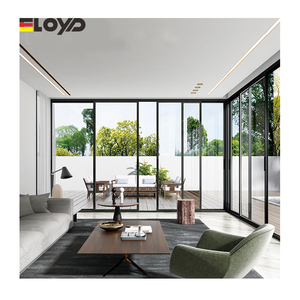
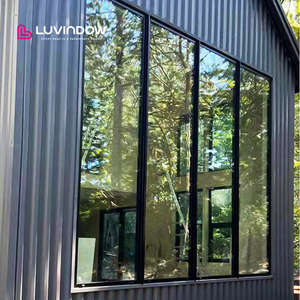
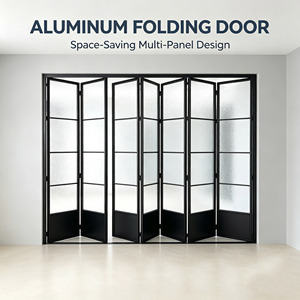
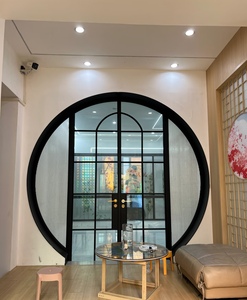
Guangdong Dejiyoupin (DERCHI): Scale, Precision, Compliance
Operating a modernized 180,000 square meter industrial campus in Shishan Town, Nanhai District, Foshan—the epicenter of China's primary architectural aluminum industry. Certified "China Famous Brand" by Xinhua News Agency with verified delivery to over 18,000 architectural landmarks worldwide.
Patented Anti-Theft Invention
Equipped with DERCHI’s proprietary Four-Side Six-Point Anti-Theft Lock system. The integrated hardware kinematics lock all perimeter edges simultaneously, resisting hydraulic pry bars up to 8,000N of localized pressure, validated under strict European RC3 security standards.
Global Certification Grand Slam
Full spectrum compliance: CE (EN 14351-1), NFRC (USA), AS2047 / AS1288 (Australia), CSA (Canada), Energy Star, and Florida High Velocity Hurricane Zone (HVHZ / TAS 201, 202, 203). Complete certified test reports available directly for municipal architectural submittals.
Intelligent Zero-Error Automation
Equipped with computerized 5-axis CNC profile machining centers, robotic corner-crimping units, and automatic dual-head miter saws. Tolerances are held strictly within ±0.2mm, backed by full dry-fit pre-assembly inspections before crating to guarantee zero site-fitting disputes.
Engineering Specifications, Metallurgy & Thermal Physics
In-depth engineering parameters designed for procurement officers, structural facade consultants, and quantity surveyors establishing strict project contract specifications.
Alloy Metallurgy & Extrusions
We formulate primary virgin aluminium billets into structural profiles delivering superior tensile modulus and surface uniformity, eliminating micro-fissures common in remelted secondary scrap.
- Primary Alloy: 6063-T5 / 6063-T6 / 6061-T6
- Wall Thickness: 1.4mm to 3.0mm (Structural Grade)
- Tensile Strength: ≥ 205 MPa (T6) / ≥ 160 MPa (T5)
- Yield Strength: ≥ 180 MPa (T6) / ≥ 110 MPa (T5)
- Hardness Rating: ≥ 12 Webster (HW)
Thermal Isolation & Glass
Continuous polyamide thermal struts minimize thermal conduction across the frame envelope. Paired with certified IGUs, our systems fulfill extreme heating and cooling climate requirements.
- Thermal Strut: Technoform PA66GF25 (24-34mm)
- Overall System U-Factor: Uw 0.8 to 1.6 W/m²·K (Passive Rated)
- Glass Build-Up: Double (DGU) / Triple (TGU) Glazed
- Gas Fill & Spacers: 90% Argon Gas / Warm-Edge Spacers
- Low-E Coatings: Double-Silver & Triple-Silver Solar-Control
Hardware & Acoustic Engineering
Engineered hardware and multi-lip vulcanized EPDM weatherstripping prevent acoustic transfer, air leakage, and water infiltration during tropical monsoon storms and high wind pressures.
- Hardware Ecosystem: Roto Frank, Siegenia, CMECH, Hopo
- Sealing Gaskets: Co-extruded EPDM Vulcanized Rubber
- Acoustic Damping: STC 35dB to 46dB (Laminated PVB/SGP)
- Cycle Testing: 50,000 to 100,000 Repeated Open/Close Cycles
- Corrosion Defense: Grade 304/316 Stainless Multi-Point Pins
Fluorocarbon (PVDF) & Architectural Powder Coating Standard
All exterior extruded profiles are treated under automated pre-treatment processes (chromium-free conversion) followed by AkzoNobel Interpon D2525 or PPG Duranar fluoropolymer PVDF electrostatic finishes conforming to AAMA 2604 / AAMA 2605 standards. Our finishes resist up to 4,000 hours of continuous neutral salt-spray testing (ASTM B117), guaranteeing 20-30 years of color fastness against chalking, fading, and peeling in harsh saline, coastal, or high-UV tropical regions.
Emerging Procurement Trends in Architectural Fenestration
Market intelligence and technological macro-shifts shaping major B2B procurement decisions for institutional developers, government tenders, and luxury villa contractors through 2035.
Net-Zero Carbon & Stringent U-Value Codes
Global regulatory frameworks (such as the EU Energy Performance of Buildings Directive and US IECC 2024 updates) mandate strict operational envelope efficiency. Real estate developers are shifting purchasing budgets toward multi-cavity thermal break extrusions with aerogel cores and warm-edge vacuum insulated glass (VIG) capable of achieving overall Uw ≤ 0.9 W/m²·K to avoid heavy municipal carbon penalties.
Ultra-Narrow Sightlines & Oversized Glass Panels
Architects demand unobstructed panoramic views, propelling the procurement of minimalist structural sliding systems with interlock stiles narrower than 20mm. High-strength structural silicone bonding (Dow Corning 983) transforms glass panels into structural load-bearing diaphragms, accommodating multi-panel moving configurations exceeding 4.5 meters in height and up to 800kg per sash.
Engineered Wind-Load & Impact Resistance
Extreme climate phenomena require heightened structural resilience. Importers are bypassing light residential-grade assemblies in favor of fenestration validated under cyclic wind pressure (±6,000 Pa) and large missile impact testing using ionoplast interlayers (SentryGlas®), securing life safety during category 5 cyclonic hurricanes without unsightly storm shutters.
Mechatronic Automation & Smart BMS Integration
Commercial hotels and luxury residences increasingly stipulate motorized sliding panels with concealed brushless DC linear actuators. Modern systems integrate directly with Building Management Systems (BACnet, KNX, Zigbee), incorporating automatic air-quality sensors, motorized micro-ventilation, and electrochromic smart tinting glass (PDLC) powered by integrated photovoltaic mullions.
BIM LOD 400 Modeling & Digital Prototyping
Contractors avoid on-site scheduling delays by mandating suppliers deliver Building Information Modeling (BIM) components at Level of Development (LOD) 400. Direct translation from parametric CAD/Revit models into automated factory CNC milling files eliminates transcribing errors, verifies clash-detection prior to die-casting, and trims manufacturing turnaround by up to 25%.
Low-Carbon Aluminum & Certified EPD Disclosures
Institutional funding requires verified Environmental Product Declarations (EPD). Modern procurement favors aluminum produced via renewable hydro-powered smelting or incorporating documented post-consumer recycled billet, reducing embodied carbon to under 4.0 kg CO2e per kg of finished aluminum alloy while maintaining prime structural rigidity.
Frequently Asked B2B Technical & Sourcing Questions
Clear, direct guidance answering technical queries faced by international purchasing directors, estimators, facade engineers, and freight forwarders.
How does the custom OEM/ODM extrusion die tooling process work?
For custom ODM structural profiles, our engineering team conducts cross-sectional structural inertia (Ix, Iy) analysis from your architectural drawings. Tooling dies are precision CNC-wire-cut within 12-15 days. Sample extrusions are run, checked on coordinate measuring machines (CMM), surface-treated, and air-freighted for client fit-up verification before mass billet extrusion commences.
How are air infiltration, water penetration, and wind load tests verified?
Every window and door system series undergoes physical mock-up testing in our computerized multi-chamber laboratory compliant with ASTM E283 (air leakage), ASTM E331 (static water penetration up to 700 Pa), ASTM E330 (structural wind load), and EN 12210. Full third-party physical test certificates by Intertek, TÜV, or SAI Global are supplied with your tender dossier.
What export packaging protocols protect fragile assemblies during ocean freight?
To withstand long intermodal sea transit and severe container vibrations, finished sashes and frames are wrapped in peelable protective film, cushioned with dense U-shaped EPE foam edging, and strapped into fumigated solid plywood crates or heavy-duty steel A-frames. Desiccant bags inside shrink-wrapped barriers mitigate thermal condensation and glass desizing.
Can you provide site measurement and installation supervision abroad?
Yes. For major commercial developments, residential tower clusters, and luxury hotel projects, DERCHI dispatches senior technical facade supervisors to the project location to conduct laser site surveys and train local installation crews. Alternatively, we supply detailed multilingual shop drawings, 3D exploded video manuals, and live video telemetry guidance.
What are standard MOQs, production lead times, and payment structures?
Our standard MOQ is flexible: 1 full 20GP container (approx. 200-300 m²) for residential orders or LCL mock-ups for approved commercial contracts. Production lead times typically span 25-35 days from approved shop drawings and glass deposit. Standard international project terms operate on 30%-50% T/T deposit with balance settled against Bill of Lading, or Irrevocable Confirmed L/C at sight.
How does DERCHI prevent galvanic corrosion in coastal installations?
In saline coastal environments, contacting dissimilar metals triggers rapid galvanic deterioration. We isolate all structural fasteners by utilizing exclusively 316 marine-grade stainless steel screws paired with vulcanized EPDM or nylon isolation grommets. Profiles receive Class 2 Qualicoat powder or fluorocarbon PVDF finishes that create a non-conductive dielectric barrier.
Source Factory-Direct Fenestration with Guaranteed Precision
Submit your architectural drawings, elevation schedules, or tender specifications. Our technical engineering division prepares full structural review calculations, Bill of Quantities (BOQ), and factory-direct pricing within 24 to 48 hours.