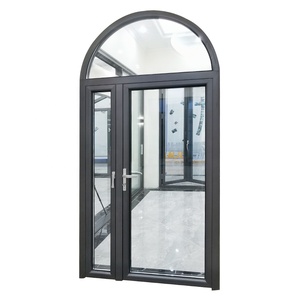
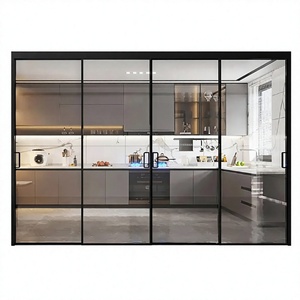
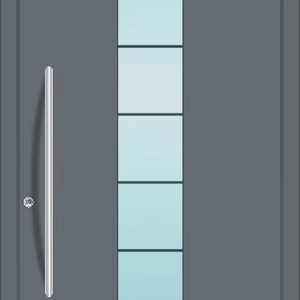
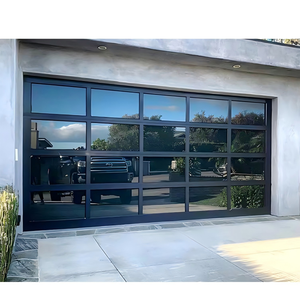
Global Fenestration Engineering Excellence

Custom OEM Aluminum Glass Window Suppliers & Exporters

Precision-engineered architectural fenestration solutions. Verified OEM/ODM capabilities, certified structural integrity, and end-to-end export support for worldwide development projects.

Portfolio Matrix

High-Performance Architectural Fenestration Systems

Explore our engineering-grade custom window and door assemblies engineered to withstand extreme cyclonic winds, intense thermal conductivity, and corrosive environments.

180,000m²
Foshan Mega Production Facility
1,000,000m²+
Annual Engineered Capacity
100+
Independent Structural Patents
18,000+
Global Landmark Projects
Manufacturing Supremacy

Why Tier-1 Contractors Rely On Our Foshan Extrusion Core

Operating as Guangdong Dejiyoupin Doors and Windows Co., Ltd. (DERCHI), we combine a quarter-century of technical fenestration expertise with rigorous multi-tier quality governance.

Patented Anti-Theft Architecture

We hold exclusive engineering rights to our proprietary Four-Side Six-Point Locking System. Integrated into high-tensile 6063-T6 aluminum frames, this mechanism offers unprecedented perimeter resistance against forced entry for luxury residential and commercial assets.

Zero-Error CNC Precision Machining

Our intelligent smart manufacturing lines utilize automated European 5-axis CNC cutters, corner crimpers, and precision laser measuring tools. Profile tolerances are maintained strictly within ±0.5mm, assuring effortless installation on job sites without field modifications.

Global Certification Grand Slam

Tested and audited under strict laboratory conditions, our products comply with American NFRC & Energy Star, European CE, Australian AS2047 & AS1288, Canadian CSA, and high-velocity coastal hurricane wind-load mandates.

End-to-End Export Logistics

From custom export fumigated wooden crating with EVA foam isolation to streamlined customs documentation (SONCAP, SASO, PVoC, CE conformity), we coordinate global shipments directly from Foshan to over 100 international seaports without breakages or moisture exposure.

Strategic Procurement Whitepaper

Next-Generation Sourcing: Procurement Trends Reshaping Fenestration

In-depth technical analysis for developers, MEP consultants, and general contractors navigating the shift toward carbon-neutral architecture, embodied carbon accounting, and supply chain resilience.

Procurement Vector Legacy Sourcing Methodology Next-Gen Engineering Paradigm (2025-2030) Impact on ROI & Compliance
Thermal Decoupling Standard non-thermal or basic 14.8mm polyamide strips Multi-cavity PA66-GF25 thermal breaks ≥ 34mm filled with aerogel insulation Reduces HVAC loads by up to 42%, securing LEED Gold/Platinum & Net-Zero ratings.
Glass Metallurgy Clear double tempered air-filled insulated glass units (IGU) Triple laminated, double silver/triple silver Low-E with 95% Argon fill & Warm Edge Spacers Controls solar heat gain (SHGC < 0.23) while maintaining 65%+ visible light transmittance (VLT).
BIM & Digital Twins 2D CAD shop drawings and manual site field measurements Fully integrated LOD 400 BIM objects with direct CNC machine toolpath automation Reduces engineering turnaround by 60% and eliminates fenestration clash errors during installation.
Carbon Lifecycle (EPD) Standard unverified secondary recycled scrap profiles Hydro-powered low-carbon virgin bauxite aluminum with verified Third-Party EPD certificates Protects project developers against carbon border adjustments (CBAM) and green tariff penalties.

Direct-to-Factory OEM Integration

Global procurement teams are eliminating intermediary trading agencies. By establishing direct technical communication with Foshan manufacturing facilities, developers capture 20% to 35% cap-ex savings while ensuring custom profile extrusions match mechanical deflection criteria.

Modular Façade Pre-Glazing

Escalating construction labor costs across Europe, North America, and Australia are driving demand for pre-glazed, unitized window modules. Pre-installing heavy laminated glass in controlled factory conditions guarantees vulcanized EPDM seal integrity and speeds up high-rise building envelope closures.

Supply Chain Diversification

To hedge against regional geopolitical shifts and shipping bottle-necks, international procurement departments require partners with massive production volume, automated material handling, and transparent traceability documentation down to raw billet chemical composition.

Engineering Evolution

Technological Frontiers in Custom Aluminum Window Design

A closer look at how precision metallurgy, slimline aesthetics, and automated smart-home connectivity are converging to define architectural glazing standards.

Ultra-Narrow Frameless Sightlines

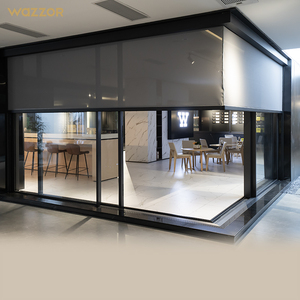
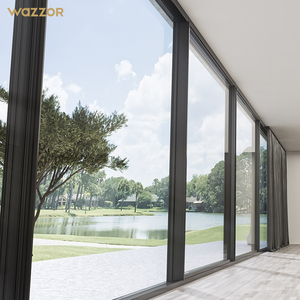
Modern luxury developments demand seamless floor-to-ceiling panoramic sightlines. By utilizing high-modulus 6063-T6 alloy frames with embedded outer jamb structures, visible face profiles are reduced to as little as 20mm while effortlessly supporting sashes weighing up to 800 kg on dual stainless steel tandem rollers.

Fluorocarbon PVDF & Extreme Anti-Corrosion Finishes

Coastal and tropical resort projects encounter aggressive saline corrosion and intense UV degradation. Advanced window assemblies employ minimum 3-coat/3-bake PVDF (Polyvinylidene Fluoride) coatings exceeding AAMA 2605 specifications, guaranteeing color fastness and chalk resistance for over 25 years.

Integrated IoT Automation & Smart Glass

Next-generation aluminum windows and sliding doors integrate conceal-mounted motorized linear actuators that interface directly with KNX, Zigbee, or BACnet building automation systems. Paired with electrochromic dynamic smart-tint glass, windows dynamically adjust solar heat gain coefficient (SHGC) based on real-time solar tracking.

Procurement Guidance

Frequently Asked Questions: Global Sourcing & Custom OEM Aluminum Windows

Clear, definitive technical and operational answers to assist procurement directors, commercial quantity surveyors, and project managers.

What are the crucial technical parameters to provide when requesting an OEM window quotation?
To achieve accurate cost estimation and engineering validation, procurement packages must include: architectural opening elevations (or schedule of windows and doors), required structural wind load design pressures (e.g., Ultimate Limit State ULS / Serviceability Limit State SLS in Pa), target thermal transmittance U-value, preferred acoustic decibel reduction (Rw), glass composition requirements (e.g., laminated, tinted, Low-E), profile finish specifications (AAMA 2604/2605 powder coat or PVDF), and hardware manufacturer preferences (e.g., German Siegenia, Hoppe, GU, or proprietary multi-point assemblies).
How do you ensure zero-defect tolerance when shipping oversized glazed units internationally?
Every production batch undergoes our 360-degree quality control protocol. Profiles are cut and pre-assembled in jig fixtures to test perimeter squareness and corner crimping strength. Prior to export packing, products undergo water tightness and air permeability spot trials. Finished assemblies are fitted with non-marking protective wrap, heavy corner guards, cushioned with EVA isolation pads, and placed into moisture-sealed solid plywood export crates treated according to ISPM-15 standards. Loading is computer-modeled to prevent dynamic container movement at sea.
Why is 6063-T6 aluminum alloy the gold standard for structural glass window profiles?
6063-T6 aluminum offers an optimal balance of tensile yield strength (minimum 214 MPa), exceptional corrosion resistance, and superb surface finish quality. When thermally broken using reinforced 25% glass-fiber polyamide bars (PA66-GF25), the extrusion maintains structural dimensional stability without thermal warping, even in desert regions with ambient day-to-night temperature fluctuations exceeding 40°C.
Can your factory accommodate country-specific building codes such as Florida NOA, AS2047, or CE?
Yes. Our product lines hold international engineering credentials including AS2047 and AS1288 (Australia), NFRC, AAMA, and CSA testing validations (North America), CE marking according to EN 14351-1 (European Union), and specialized High Velocity Hurricane Zone (HVHZ) impact approvals. We furnish signed engineering test reports and structural shop calculations validated by accredited third-party test laboratories.
What is the typical manufacturing lead time for custom OEM commercial fenestration orders?
Standard OEM production ranges from 25 to 35 working days upon final architectural shop drawing approval and color finish sign-off. For custom die extrusions or specialized curve/radius bending profiles, an initial tooling phase of 12 to 15 days is scheduled. Urgent modular phases can be coordinated through split-container batch deliveries.
What installation and on-site technical support do you provide overseas?
Every shipment includes an exhaustive, bilingual installation manual with 3D isometric connection drawings, perimeter sealant application diagrams, and anchor placement intervals. For large-scale mixed-use, hotel, or residential developments, our senior façade engineers can be dispatched directly to your international project site to provide hands-on assembly training, quality mock-up testing, and installation supervision.
Ready to Engineer Your Next Façade Project?

Submit your architectural elevations, opening schedules, or tender documents. Our fenestration engineering group will furnish a detailed technical proposal with wind-load evaluations and competitive factory-direct pricing within 24 hours.