Architectural Catalog
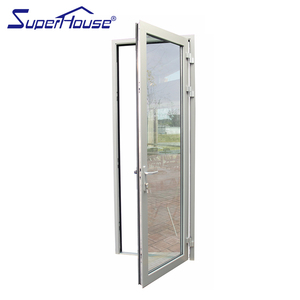
Featured Aluminum Fenestration & Door Systems
Factory-direct structural aluminum entries, panoramic lift-and-slide patio solutions, heavy-duty pivots, and impact casements engineered for extreme structural loads and coastal air resistance.
Manufacturing Rigor
Guangdong Dejiyoupin: Global Fenestration Scale
Headquartered in Shishan Town, Nanhai District, Foshan—the epicenter of China's structural aluminum extrusion industry. Over 25 years of engineering leadership, delivering zero-tolerance architectural door solutions.
180,000m²
Production Base in Foshan
1,000,000+m²
Annual Fabricated Capacity
18,000+
Commercial & Villa Projects Completed
100+
Proprietary Inventions & Patents
Patented Anti-Theft Architecture
Equipped with DERCHI’s patented Four-Side Six-Point Lock mechanism. Unlike conventional single-point latch systems, our hardware integrates high-shear perimeter locking lugs that defend against forced physical entry, pry-bar attacks, and cyclic wind pressures.
International Certification Grand Slam
Fabrication standards certified across premier international testing regimes: NFRC (USA), AAMA, AS2047 (Australia), CE (European Union), CSA (Canada), Energy Star, and ISO 9001. Certified impact ratings survive extreme missile impact and ASTM wind cyclics.
Zero-Tolerance Intelligent Milling
State-of-the-art CNC 5-axis profile machining centers ensure corner-joint tolerances within ±0.1mm. High-pressure corner crimping combined with dual-component German polyurethane injection delivers hermetically sealed corner joints impervious to water leaks.
Strategic Procurement
Future Procurement Trends in Architectural Aluminum Doors
Analysis for commercial developers, general contractors, and facade engineers sourcing fenestration packages from China through 2026–2030.
1. Polyamide PA66 GF25 Deep Thermal Breaks
Global building energy codes (such as IECC 2024, California Title 24, and South African SANS 10400-XA) demand whole-assembly U-factors below 0.28 BTU/(hr·ft²·°F) [1.60 W/(m²·K)]. Sourcing has shifted decisively away from non-thermal profiles toward 34mm+ multi-chambered glass-fiber reinforced polyamide thermal barriers.
2. Ultra-Narrow Sightlines with Extreme Load Capacity
Luxury residential and modern hospitality designs specify minimal structural sightlines (under 25mm interlocks) capable of supporting 600kg+ double or triple-glazed IGU panels. Sourcing requires manufacturers capable of engineering concealed stainless steel running gears and concealed pneumatic dampeners.
3. Direct Factory Pre-Glazing & Modular Crating
Due to surging job-site labor costs in North America, Western Europe, and Australasia, developers favor factory pre-glazed, pre-hung door units. Procuring pre-assembled systems in steel reinforced A-frames slashes site installation schedules by up to 60% while eliminating job-site glazing errors.
Engineering White Paper: Material Selection for Coastal & Tropical Environments
When selecting an aluminum door manufacturer in China for coastal developments (such as Florida, the Caribbean, the Gulf of Guinea, Mombasa, or Durban), raw aluminum alloy composition and surface finishing dictate the asset's design life. Commercial systems must use primary 6063-T6 or 6061-T6 architectural billeting with strict manganese, silicon, and copper controls to prevent intergranular micro-corrosion.
Furthermore, powder coat coatings must conform to AAMA 2605 or Qualicoat Class 3 specifications utilizing Polyvinylidene Fluoride (PVDF/Fluorocarbon) resins with at least 70% Kynar 500. This maintains color retention over 20+ years under aggressive UV solar degradation and marine salt-fog exposure exceeding ASTM B117 4,000-hour testing.
Data Visualization
B2B Architectural Performance Matrix
Compare our engineered aluminum door systems across key international ASTM, EN, and AS fenestration standards.
| Door System Typology | Alloy & Wall Thickness | Thermal Performance (U-Factor) | Air / Water Airtightness | Structural Wind Load | Security Level |
|---|---|---|---|---|---|
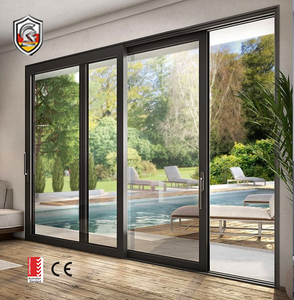
| Heavy-Duty Lift & Slide | 6063-T6 / 2.0mm – 3.0mm | U ≤ 1.4 – 1.8 W/(m²·K) | Class 4 (EN 12207) / 700 Pa | Design Load ≥ 4.5 kPa | RC2 / Multi-Point Pin |
| Hurricane Impact Casement | 6063-T6 / 2.0mm – 2.5mm | U ≤ 1.2 – 1.6 W/(m²·K) | ASTM E283 ≤ 0.1 cfm/ft² | ASTM E330 ≥ 100 psf | NFRC / Florida NOA Compliant |
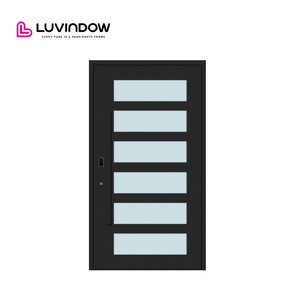
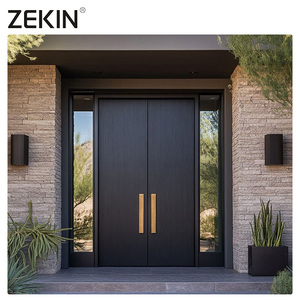
| Grand Residential Pivot Door | Reinforced 6061-T6 / 3.0mm | U ≤ 1.6 – 2.0 W/(m²·K) | Drop-down bottom pneumatic seal | Design Load ≥ 3.8 kPa | Patented 4-Side 6-Point Lock |
| Slimline Exterior Bifold | 6063-T5 / 1.8mm – 2.2mm | U ≤ 1.5 – 1.9 W/(m²·K) | Dual EPDM continuous compression | Design Load ≥ 3.2 kPa | Heavy-Duty Interlocking Hinge |
| Commercial Armored Entrance | Solid Extrusion / 3.5mm+ | Custom Composite Core | Airtight Perimeter Sweep | Design Load ≥ 5.0 kPa | Anti-Drill / Bullet-Resistant Glass Option |
Buyer Knowledge Base
Frequently Asked Technical Questions (FAQs)
Everything procurement directors, developers, and quantity surveyors must know when buying architectural doors directly from Chinese manufacturing lines.
How does DERCHI ensure zero-error dimensional tolerances on custom rough openings?
We employ an 8-step engineering protocol. Prior to extrusion cutting, shop drawings generated in CAD/BIM are signed off by your project structural engineer. Our 5-axis CNC machining stations cut extruded stock to a tolerance within ±0.1mm. Before crating, every door frame and panel undergoes full shop mock-up assembly where squaring, diagonal variance (≤1.5mm), operating hardware clearance, and corner coplanarity are measured and laser-verified under strict ISO 9001 quality audits.
What glass configurations are paired with your aluminum doors to resist heat gain?
We provide custom insulated glass units (IGU) featuring dual-seal warm-edge spacers (Technoform). Standard high-performance makeups incorporate 6mm High-Performance Low-E (such as Solarban 60 or 70 equivalents) + 12A/16A Argon gas fill + 6mm Clear Tempered Glass. For hurricane-prone or high-security developments, we laminate panels with Kuraray SentryGlas (SGP) or 1.52mm PVB interlayers to stop structural impact penetration and reduce acoustic transmission (STC ≥ 42 dB).
How do you protect oversized aluminum doors against maritime freight damage?
Container loading is a core engineering discipline. All aluminum profiles are wrapped in protective non-staining surface film and heavy closed-cell foam tubing. Glass assemblies and complete knock-down (CKD) or pre-assembled panels are packed inside heat-treated, fumigated solid OSB wooden crates lined with moisture desiccant bags. Crates are fixed with internal steel strapping and anchored to container tie-downs to withstand extreme dynamic forces during multi-week ocean transport.
Can your systems satisfy specific local building standards (AS2047, NFRC, SANS)?
Yes. DERCHI products hold an international certification suite including Australian AS2047 / AS1288, American NFRC / AAMA / Florida Hurricane NOA, European CE, and Canadian CSA. We regularly provide complete structural calculations, thermal finite element simulations (THERM models), and test reports required by municipal building inspectors and facade consultants worldwide.
What is the typical production and delivery lead time for commercial volumes?
Standard production schedules range between 25 to 35 business days following final shop drawing approval and hardware finish locking. For specialized requirements (such as bespoke custom extrusion dies or exotic PVDF colors), lead times range from 40 to 45 days. We coordinate direct vessel dispatch from Foshan, Guangzhou, or Shenzhen ports to ensure direct transit times to international destinations.
Ready to Engineer Your Project's Door Package?
Submit your architectural schedule, elevations, or window & door schedules. Our senior engineering team will return complete BIM/CAD submittals, wind-load assessments, and factory-direct pricing within 24 hours.
Get Catalog