High-Performance Window & Glazed Door Systems
Manufactured to rigorous international standards (CE, NFRC, AS2047, CSA), our advanced fenestration configurations integrate high-tensile 6063-T5 aluminum, reinforced multi-point security hardware, and precision multi-chamber thermal breaks.
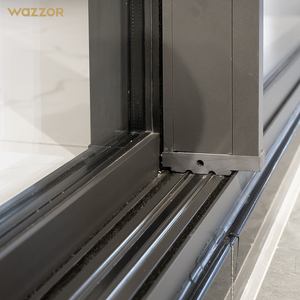
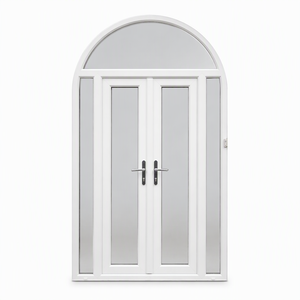
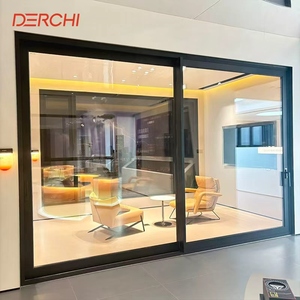
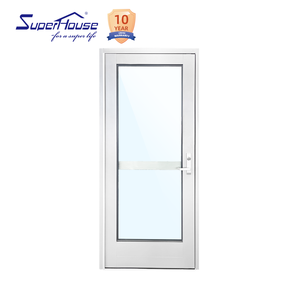
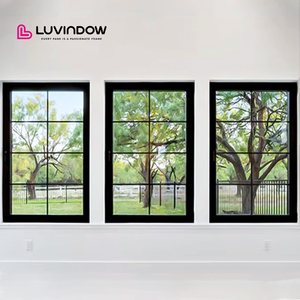
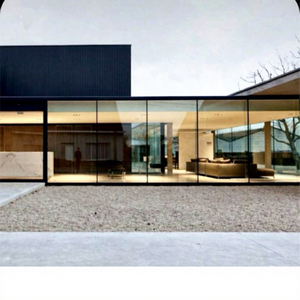
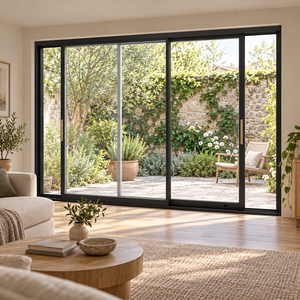
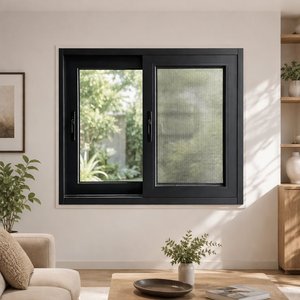
Architectural Casement Window Selection Matrix
Sourcing commercial aluminum casement windows requires balancing structural wind loads, thermodynamic heat transfer coefficients (U-factors), and acoustic attenuation. Below is our engineering guidance tailored for international specifiers.
Coastal & High-Velocity Hurricane Zones
For coastal developments prone to cyclonic depressions (USA Florida ASTM E1886/E1996, Caribbean, Pacific Rim), specify our Hurricane-Impact Casements with 2.0mm+ primary wall thickness extruded from 6063-T6 virgin billet. Outfitted with SentryGlas® (SGP) laminated structural interlayers, 12-point perimeter security locks, and anti-corrosive PVDF tri-coat finishes resisting 3,000-hour neutral salt spray (ASTM B117).
Passive House & Alpine Thermal Efficiency
For European, North American, and Central Asian regions subject to extreme sub-zero weather, choose our Iso-Bar 75 & 85 Series. Incorporating multi-chamber technoform PA66 GF25 polyamide thermal isolators, argon-filled triple insulating glass units (IGU), warm-edge composite spacers, and dual low-emissivity magnetron sputtering coatings to achieve certified overall U-values down to 0.82 W/(m²·K) [U-factor 0.14 BTU/h·ft²·°F].
Metropolitan Hospitality & Acoustic Attenuation
Urban boutique hotels and transit-oriented developments require strict acoustic isolation from air traffic and highway noise. Our acoustic casements utilize asymmetrical laminated glazing configurations (e.g., 8mm Toughened + 1.52mm Acoustic PVB + 6mm Toughened + 16Ar + 8mm Low-E) combined with continuous EPDM triple-compression co-extruded gaskets, delivering verified sound transmission ratings up to STC 44 / OITC 36.
Future Procurement Trends in Architectural Aluminum Windows
Procurement directors and commercial developers are transitioning away from generic commodity extrusions toward holistic lifecycle performance, digital interoperability, and low-carbon compliance. Here are the 4 fundamental trends defining international window contracts.
1. EPD & Low-Carbon Aluminum
Global institutional developers (LEED v4.1, BREEAM, and EU CBAM compliant) now audit the embodied carbon of aluminum extrusions. Top Chinese exporters are adopting hydroelectric and solar-smelted low-carbon primary ingots with Environmental Product Declarations (EPD), reducing cradle-to-gate carbon emissions below 4.0 kg CO2e per kg of finished framing.
2. Digital BIM & Pre-Fab Modularization
Paper submittals are being superseded by Level 200–400 Building Information Modeling (BIM) families. Modern procurement integrates parametric window profiles directly into Revit/Archicad workflows, paired with factory-glazed, unitized subframe assemblies that slash job-site installation times by 45% compared to wet-seal field installation.
3. Concealed Actuation & Smart BMS
High-end residential villas and commercial facades require uncompromised minimalist visual sightlines. Concealed 24V DC chain drive micro-actuators embedded inside the aluminum sash rebate integrate with KNX, BACnet, and smart home protocols for automated night purge, fire smoke venting, and indoor CO2 regulation without visible surface wires.
4. Multi-Point Forensic Security Standards
Rising focus on residential perimeter integrity has made multi-point security a mandatory baseline. Our patented "Four-Side Six-Point Lock" invention patent locks the casement sash continuously around the frame perimeter, frustrating pry-tool attacks and surpassing EN 1627 RC3 / PAS 24 burglar resistance testing.
Engineering Specifications & Quality Benchmarking
A granular overview comparing conventional commercial extrusions with DERCHI precision-engineered aluminum casement window systems.
| Performance Criterion | Standard Commercial Grade | DERCHI High-Performance Casement | Test Standard Compliance |
|---|---|---|---|
| Alloy Composition | Recycled / Secondary 6063 Aluminum | 100% Virgin 6063-T5 / 6063-T6 Precision Billet | ASTM B221 / GB 5237.1 |
| Thermal Barrier Core | PVC / Low-grade composite strip (14.8mm) | Technoform PA66 GF25 Polyamide (24mm - 34mm) | EN 14024 Standard |
| Thermal Transmittance (U-Value) | Uw ~ 2.4 - 3.2 W/(m²·K) | Uw ~ 0.82 - 1.35 W/(m²·K) [NFRC / CE Rated] | NFRC 100 / EN ISO 10077-1 |
| Wind Pressure Resistance | Class 3 (~2,000 Pa) | Class 9 / ≥ 5,000 Pa (140+ mph Hurricane Proof) | ASTM E330 / AS2047 / EN 12210 |
| Water Penetration Resistance | 300 Pa Static Head | 900 Pa - 1,200 Pa Pressure-Equalized Cascade | ASTM E331 / EN 12208 |
| Locking Mechanism | Single or Dual Cam Lever Handles | Patented 4-Side 6-Point Mushroom Head Gearbox | PAS 24 / EN 1627 RC2/RC3 |
| Hardware Cycle Life | 10,000 cycles | 50,000+ Operating Cycles (Siegenia / CMECH / Roto) | AAMA 910 / EN 13126 |
Evolution of Aluminum Casement Engineering
From simple extruded profiles to intelligent, thermodynamic architectural building skins, the design and manufacturing of Chinese aluminum casement windows has undergone a paradigm shift over the past decade.
Pressure-Equalized Rainscreen Cavity
Traditional windows rely solely on perimeter wet seals that inevitably degrade under ultraviolet solar degradation. Modern DERCHI casements deploy the internal rainscreen principle: dual continuous EPDM gaskets create a dry decompression chamber, using gravity and differential pressure drains to eject wind-driven driving rain without moisture migrating inside the building envelope.
Thermally Broken Corner Injection Crimping
Structural integrity depends on frame corner joints. We utilize cast aluminum corner keys combined with automated pneumatic punching and dual-component polyurethane (PUR) corner-seal injection. This eliminates thermal bridging at miter seams, prevents sash sagging over 25+ years, and preserves air-tightness under heavy cyclic wind buffeting.
Flush-Sightline Minimalist Aesthetics
Contemporary luxury villa architecture prioritizes unobstructed natural daylight. Our ultra-narrow sash profiles (as slim as 38mm visible sash width) support structural glass bonding, where insulated glass units are structurally glazed directly to the sash frame, transforming the glass into a load-bearing member and optimizing solar heat gain coefficients (SHGC).
Why International Developers Source from Our Foshan Base
Operating from Nanhai, Foshan—the epicenter of global aluminum fenestration manufacturing—Guangdong Dejiyoupin Doors and Windows Co., Ltd. (DERCHI) combines industrial-scale efficiency with bespoke architectural craftsmanship.
180,000 m² Mega Manufacturing
Equipped with automated CNC double-head precision cutting lines, robotic assembly workstations, and computerized glass cutting and insulating production lines yielding over 1,000,000 square meters annually.
Xinhua "China Famous Brand"
Endorsed by state-level media and worldwide project consultants, with a documented annual turnover exceeding $435M and active commercial installations in over 80 countries spanning the Americas, Africa, Europe, and Australasia.
International Testing "Grand Slam"
Fully compliant with CE (Europe), NFRC / Energy Star / Miami-Dade Hurricane (USA), AS2047 / AS2208 (Australia & New Zealand), and CSA (Canada), supported by in-house calibrated test chambers for wind, water, and cyclic loading.
Complete Project Engineering Support
Our dedicated 30+ person fenestration R&D engineering division provides shop drawing generation, thermal simulation reporting (THERM/WINDOW), structural wind load calculations, and site installation supervision support.
Frequently Asked Questions for B2B Window Importers
Direct technical and logistical answers to critical procurement questions asked by real estate developers, general contractors, and facade engineers.
How do you guarantee frame coating longevity on coastal construction sites?
For coastal projects situated within 5 miles of maritime salt air, we strictly prohibit standard powder coatings. Instead, we apply architectural grade PVDF (Polyvinylidene Fluoride) fluorocarbon coatings or marine-grade AkzoNobel Interpon D3000 series with pre-treatment anodizing (Qualicoat Class 3 / AAMA 2605 compliant). This guarantees zero chalking, blistering, or flaking under 10-year to 20-year international project warranties.
What quality assurance protocols occur prior to ocean container loading?
Every custom production run undergoes an 8-stage Quality Acceptance (QA) protocol: raw profile tensile check, anodizing/coating mil-thickness testing (ASTM B499), IGU dew point analysis (ASTM E546), sash diagonal corner tolerance verification (±1.0mm), mock-up air/water static pressure chamber testing, and final packaging in non-fumigated plywood crates cushioned with multi-layer high-density EPE foam.
Can your factory produce custom extrusions for specialized curtain wall interfaces?
Yes. If our library of 500+ standard architectural extrusion dies does not match your facade profile schedule, our in-house tooling workshop designs and cuts custom extrusion dies within 12–16 business days. We provide rapid 3D prototyping and preliminary die sample extrusions for consultant sign-off prior to volume bill-of-materials extrusion.
What are the standard lead times for FCL (Full Container Load) project orders?
Following final shop drawing sign-off and color sample approval, manufacturing lead times are typically 25 to 35 calendar days for standard thermal-break systems, and 35 to 45 calendar days for custom-curved arches, automated motorized casements, or triple-laminated impact configurations. Staggered batch container shipments are coordinated to match on-site construction schedules.
How do you assist foreign buyers with customs clearance and certification paperwork?
Our dedicated export documentation department provides complete CIF/FOB/DDP export documentation including customized Certificate of Origin (Form E, CO, etc.), commercial invoices, detailed packing schedules organized by building level/mark, structural glass test reports (SGCC / CE / AS2208), and pre-shipment compliance inspection reports such as SONCAP (Nigeria) or PVoC (Kenya).
What hardware options are integrated into your heavy-duty casement systems?
We partner with premier hardware manufacturers worldwide. Clients can specify German-engineered Siegenia, Roto Frank, Hoppe, or CMECH architectural 304/316 stainless steel multi-point friction stays, heavy-duty concealed hinges handling up to 130kg sash weights, and ergonomically sculpted lock handles tested for over 50,000 continuous opening cycles.
Request an Engineered Fenestration Proposal & Factory Price List
Send your architectural elevation schedules, window schedules, or structural specifications. Our facade engineering team provides itemized quotes, thermal calculations, and CAD submittals within 24 hours.