High-Performance Storm & Architectural Fenestration Portfolio
Factory-direct hurricane-grade doors, thermal-break storm windows, and heavy-duty sliding systems verified to rigorous ASTM, TAS 201/202/203, NFRC, CE, and AS2047 international benchmarks.
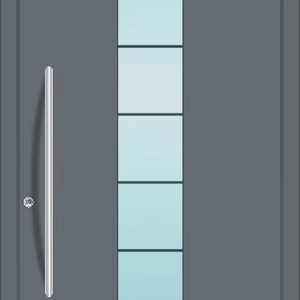
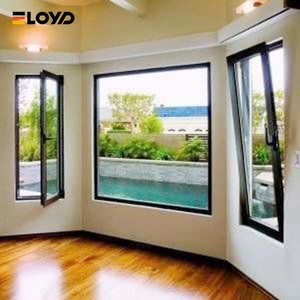
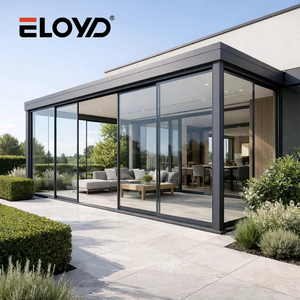
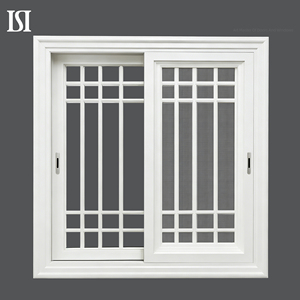
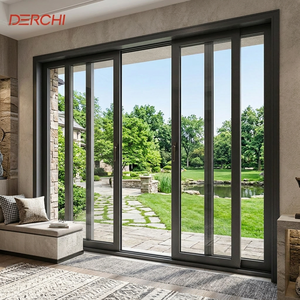
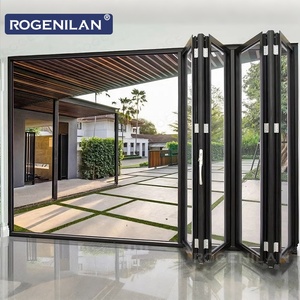
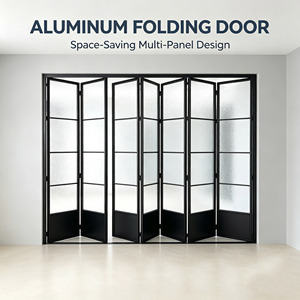
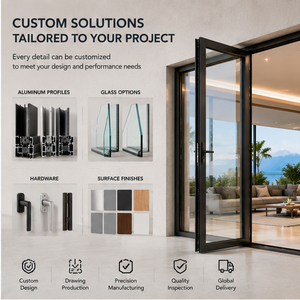
Why Tier-1 Developers & Glazing Contractors Source From DERCHI
Headquartered in Nanhai, Foshan—the epicenter of global aluminum extrusion—Guangdong Dejiyoupin Doors and Windows Co., Ltd. (DERCHI) combines over 25 years of fabrication expertise with zero-error automated assembly.
Patented Anti-Theft Lock
Proprietary Four-Side Six-Point Lock invention patent delivers unmatched security, preventing perimeter sash deflection under extreme hurricane suction pressures.
- Tested to ASTM F588 Class 40
- Concealed multi-point mechanical linkage
Global Certification Suite
Complete compliance verified across key regulatory bodies, ensuring rapid building-inspection sign-offs without secondary test burdens.
- US: NFRC Thermal & Florida Hurricane
- EU: CE EN14351-1 & Australia AS2047
Zero-Error CNC Production
Automated cutting, corner crimping, and precision milling maintain linear tolerances within ±0.3mm for seamless on-site dry glaze assembly.
- Dual-component corner bracket reinforcement
- Full perimeter German EPDM co-extrusion
Consolidated Export Logistics
Factory-direct staging in Foshan with custom heavy-timber crating, A-frame glass racking, and pre-indexed floor-by-floor job pack manifests.
- Delivering to 18,000+ projects globally
- Full documentation: CO, SONCAP, PVoC
Structural Fenestration Design: Resisting Wind Load, Air Infiltration & Cyclic Fatigue
Commercial architectural fenestration requires deep mathematical understanding of building envelope dynamics. This technical review clarifies what distinguishes certified aluminum storm windows from generic residential extrusions.
1. The Mechanics of Wind Load Resistance: High Design Pressure (DP) & Cyclic Fatigue
In coastal hurricane zones and high-rise commercial structures, windows do not fail merely from peak gust velocity; they fail from cyclic fatigue loading. Under ASTM E1886 and ASTM E1996 protocols, fenestration must undergo 9,000 positive and negative pressure cycles following large missile impact (a 9 lb, 2x4 lumber projectile shot at 50 ft/s). If the structural sealant ruptures or the aluminum frame sashes disengage from the master frame, structural depressurization occurs, causing catastrophic roof loss.
DERCHI storm systems utilize virgin 6063-T6 billet aluminum with optimized web wall thicknesses (ranging from 2.0mm to 3.5mm on structural jambs and interlocks). By utilizing internal steel reinforcements and reinforced gusseted corner keys injected with high-density polyurethane bonding adhesive, DERCHI assemblies sustain Design Pressures exceeding DP70 to DP100, accommodating dynamic gust forces up to 210 mph without permanent sash deflection exceeding L/175 of the span.
2. Glazing Package Architecture: SGP (SentryGlas) vs. Standard PVB Interlayers
A critical engineering differentiator between standard safety glass and true storm-rated laminated glass is the choice of interlayer polymer. Standard polyvinyl butyral (PVB) is flexible and elastomeric. While effective for basic acoustic dampening and low-velocity impact, PVB softens rapidly in warm, humid coastal ambient temperatures (above 30°C / 86°F), leading to interlayer tearing when subjected to post-impact cyclical wind pressures.
For high-hazard coastal zones (such as Florida HVHZ, the Caribbean basin, and Pacific typhoon corridors), DERCHI engineers specify Kuraray SentryGlas® (SGP) ionoplast interlayers. SGP is 100 times stiffer and possesses 5 times the tear strength of traditional PVB. In the event that outer tempered glass lites break, the SGP composite maintains rigid architectural planar integrity, preventing atmospheric pressure breach. When paired with high-performance Low-E coatings (such as triple-silver magnetron sputtered Low-E) and warm-edge structural silicone spacers, the composite delivers extraordinary thermal shielding (U-factors down to 0.22 BTU/hr·ft²·°F).
| Performance Attribute | Standard Commercial Aluminum Window | DERCHI Heavy-Duty Storm Impact Window | Engineering Benefit & ROI |
|---|---|---|---|
| Alloy Metallurgy & Wall Spec | Recycled billet 6063-T5; 1.2mm - 1.4mm profile walls | Prime Virgin 6063-T6; 2.0mm - 3.2mm structural walls | Prevents torsion failure; accommodates larger architectural spans |
| Impact Resistance Class | Non-rated or Small Missile Category B only | Large Missile D & E (TAS 201 / ASTM E1996 Level D) | Certified protection against airborne storm debris up to 50 ft/s |
| Thermal Decoupling | Poured and debridged urethane or uninsulated | Polyamide PA66GF25 multi-cavity thermal break strips | Eliminates internal condensation; cuts HVAC consumption by 38% |
| Hardware & Locking Nodes | Single-point cam locks; stamped zinc hinges | Patented Four-Side 6-Point Lock; 304/316 Stainless hardware | Resists forced entry, salt-fog pitting, and negative suction pullout |
| Surface Finish Standard | Standard architectural powder coat (30μm) | AAMA 2605 Fluropon® 70% PVDF / 25μm Hard Anodized | Exceeds 4,000-hr salt-spray test without chalking or peeling |
Emerging Procurement Trends Shaping Global Aluminum Fenestration (2025–2030)
Commercial developers, general contractors, and facade consultants are adjusting their sourcing methodologies. What are the key procurement drivers dictating factory-direct transactions with China's leading fenestration manufacturers?
1. Consolidation Over Fragmentation
Historically, developers bought unglazed extrusions locally, sourced glass units from independent processors, and acquired hardware from third parties. This fragmented workflow caused costly site finger-pointing whenever air leakage or water infiltration occurred during field testing.
Global procurement teams now mandate single-source accountability. By ordering unitized, factory-glazed systems directly from DERCHI, contractors gain unified warranty packages, pre-calibrated sash-to-frame clearances, and comprehensive factory hydrostatic testing prior to shipment.
2. Stringent Embodied Carbon & ESG Metrics
Institutional developers face tight Scope 1, 2, and 3 carbon disclosure targets. Modern window procurement requires audited Life Cycle Assessments (LCAs) and verified Environmental Product Declarations (EPDs).
Leading Chinese manufacturers like DERCHI utilize closed-loop aluminum scrap recycling, hydro-powered smelting inputs, and non-toxic chromate-free pre-treatment washes to lower embodied carbon, enabling projects to secure maximum LEED v4 and BREEAM sustainability credits.
3. Digital BIM Integration & Pre-Verification
The days of procurement based solely on 2D shop drawings have closed. Modern architectural firms demand native Autodesk Revit BIM models with parameterized thermal coefficients, structural load tables, and acoustic attenuation curves.
DERCHI's internal R&D engineering division delivers comprehensive digital asset twins, collision-detection CAD models, and finite element analyses (FEA) for anchor loads, expediting municipal engineering plan-checks and architectural approvals.
Future Trajectories in Aluminum Storm Window Engineering
The fenestration sector is moving beyond passive barriers. Structural dynamics, micro-climate adaptation, and smart automation are converging to create the next generation of building facade technology.
Multi-Cavity Polyamide Insulbar Technology
Traditional thermal breaks used simple rectangular nylon strips. Next-generation systems feature multi-chambered, hollow-core PA66GF25 isolators with internal low-emissivity foil reflections. This slows internal convective loops, pushing aluminum window frame U-values below 1.1 W/m²·K without inflating profile depths.
- Eliminates thermal bridging in high-delta environments
- Retains structural shear strength under heavy gust cycling
Motorized Multipoint & BMS Automation
Modern luxury villas and commercial towers are pairing impact-rated window mechanisms with concealed 24V brushless DC linear actuators. Synchronized locking nodes latch and seal automatically when anemometers register gale-force winds exceeding preset thresholds.
- Fully integrated with KNX, Crestron & BACnet protocols
- Failsafe internal backup capacitors ensure storm-seal closure
Ultra-Narrow Sightline Structural Glazing
Architects continuously push for minimal visible framing with maximal glass daylighting. Conventional impact windows relied on bulky 100mm+ face profiles to support wind loads. Modern systems employ structural silicone glazing (SSG) with hidden outer perimeters and high-modulus carbon-fiber internal profile stiffeners.
- Interlock sightlines narrowed down to 20mm – 28mm
- Retains full DP80 structural capacity over 3.5m sash heights
Frequently Asked Questions: Global Window Sourcing & Compliance
Detailed engineering, logistical, and warranty insights to de-risk your overseas fenestration supply chain.
What specific testing criteria prove an aluminum window is truly "hurricane rated"?
True hurricane impact windows must hold certified test reports from accredited laboratories validating compliance with ASTM E1886/E1996 (Standard Specification for Performance of Exterior Windows Impacted by Windborne Debris) or Florida Building Code TAS 201 (Large Missile Impact), TAS 202 (Uniform Structural Load), and TAS 203 (Cyclic Wind Pressure Loading). Always request test lab numbers, notice of acceptance (NOA), or engineer-stamped test reports rather than generic factory certificates.
How does DERCHI prevent galvanic and coastal salt-spray corrosion on overseas shipments?
For coastal applications, aluminum extrusions are treated with genuine architectural AAMA 2605 70% fluorocarbon PVDF finishes or Class I 25-micron anodic oxidations. Every assembly fastener, hinge pin, and roller axle is specified in high-grade 304 or 316 marine austenitic stainless steel. Furthermore, synthetic neoprene or EPDM isolation gaskets separate dissimilar metals, preventing direct galvanic current conduction and eliminating pitting.
What is the typical production lead time and minimum order quantity (MOQ)?
Standard architectural projects typically require 25 to 35 business days for factory fabrication following final shop drawing and finish sign-off. We accommodate flexible procurement frameworks: our facility handles containerized bulk runs for mid-to-high-rise commercial developments as well as custom-engineered whole-house villa packages with zero minimum order quantity restrictions.
How are heavy-gauge glass products packaged to eliminate breakages during ocean transit?
Every window unit is wrapped in multi-layer electro-static PE surface film, edge-fitted with rigid high-density foam protectors, and crated inside heavy, fumigated non-coniferous hardwood cases banded with galvanized steel tension straps. Glass packages are loaded on balanced A-frames inside standard 40ft High Cube containers with custom dunnage airbags, maintaining a historical in-transit breakage rate below 0.1% over 18,000+ international projects.
Can DERCHI match bespoke architectural colors, dual-tone finishes, and custom jamb depths?
Yes. As an end-to-end industrial manufacturer with in-house vertical powder coating and fluorocarbon application lines, we produce exact RAL color matches, textured architectural metallics, and realistic heat-transfer fluorocarbon wood grains. Dual-tone profiles—where the exterior matches community facade codes while the interior coordinates with interior design palettes—are standard options across our thermal-break lines.
What on-site installation support and technical documentation is provided to contractors?
With every completed project order, DERCHI issues full installation shop drawings, section details, perimeter flashing instructions, anchor spacing schedules, and structural silicone application manuals. For large commercial or multi-family projects, our senior technical engineers can provide on-site installation supervision or conduct step-by-step remote video QA inspections with your general contracting crews.
Ready to Engineer Your Project's Fenestration Envelope?
Send us your architectural CAD drawings, opening schedules, or window specifications. Our senior fenestration engineers will provide structural load assessments, thermal performance calculations, and an itemized factory-direct commercial proposal within 24 hours.