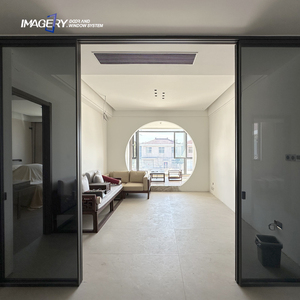
Simple Design Extremely Narrow Frame Aluminum Sliding Door Wide View for Kitchen Living Room
Engineered for thermal performance, acoustic attenuation, and architectural beauty. Explore our CE-certified systems manufactured under tight industrial tolerances.
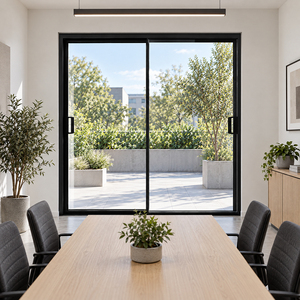
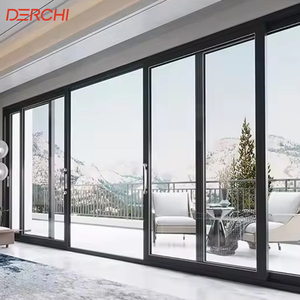
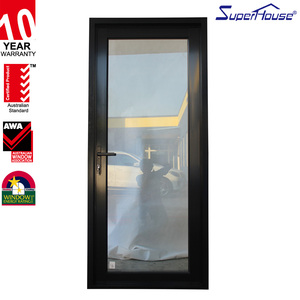
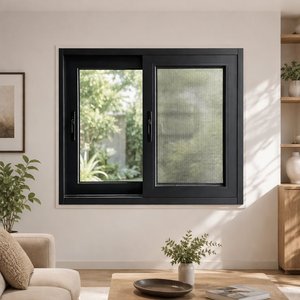
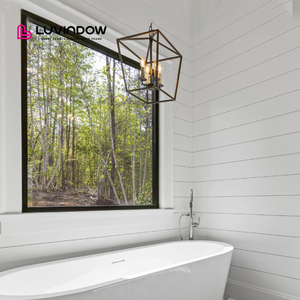
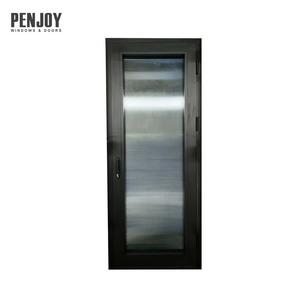
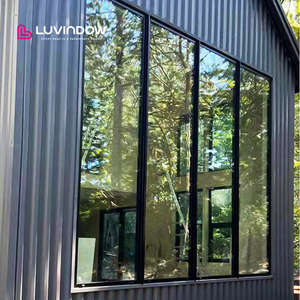
In structural engineering and building envelope design, sourcing CE certified aluminum door with window factories involves more than checking compliance boxes; it represents a commitment to predictable mechanical stability and hygrothermal efficiency. The harmonized European standard EN 14351-1 dictates crucial criteria for external doors and windows without resistance to fire or smoke leakage characteristics. Sourcing directors and structural engineers evaluate several physical criteria before releasing procurement orders:
1. Air Permeability (EN 12207): The enclosure's capacity to minimize conditioned air loss under positive and negative pressures. Class 4 rating signifies an air infiltration rate of less than 3 m³/(h·m²) at 100 Pa, crucial for energy containment.
2. Watertightness Under Dynamic Pressure (EN 12208): Critical for high-rise facades and oceanfront developments. Our engineered sub-sill drainage networks and pressure-equalized chambers ensure ratings up to Class 9A or Exxx (over 600 Pa dynamic water immersion resistance).
3. Wind Load Resistance (EN 12210): Calculated via deflection analysis (Class C1 to C5). Structural members engineered with 6063-T6 virgin alloys exhibit optimal moment of inertia (Ix/Iy), resisting cyclonic deflections without yielding profile anchors or popping glazing beads.
4. Thermal Transmittance (EN ISO 10077-1/2): Modern architectural profiles incorporate multi-chambered polyamide thermal isolators (PA66 GF25), cutting the overall envelope U-factor below 1.2 W/(m²·K) when integrated with argon-filled low-emissivity warm-edge insulated glass units.
For international developments requiring cross-jurisdictional compliance, DERCHI synchronizes its European CE conformity with parallel global architectural frameworks:
| Performance Category | European Union (CE Marking) | North America (AAMA/WDMA/NFRC) | Australia / Oceania (AS2047) |
|---|---|---|---|
| Primary Standard | EN 14351-1:2006+A2:2016 | NAFS-17 / NFRC 100 & 200 | AS 2047-2014 / AS 1288 |
| Air Permeability | Class 1 – Class 4 (EN 12207) | Performance Class R, LC, CW, AW | Low / High Infiltration (AS 4420.4) |
| Water Penetration | Class 1A – Class 9A & Exxx (EN 12208) | Test Pressure up to 15% Design Load | Static & Cyclic (150 Pa – 450+ Pa) |
| Thermal Rating | U-value (Uw) via EN ISO 10077 | U-Factor & SHGC via NFRC Testing | Total System U-value & SHGC (BERS) |
| Structural Stability | Class 1 – 5, Relative Front Deflection A, B, C | Deflection Limit L/175; AW up to L/240 | Deflection ULS & SLS verification |
Market intelligence and technological trajectories shaping international envelope procurement over the next five years.
Institutional developers are pivoting away from multi-tiered brokers toward factory-direct alliances. Traceability of raw materials—including certified ingot origin, extrusion traceability, and EPD (Environmental Product Declarations)—is becoming standard in bid requirements for commercial and infrastructure envelopes.
Standard architectural sizing is transitioning into digital twins. Advanced suppliers must deliver precision Revit/IFC parametric BIM models capable of populating automated fenestration schedules with embedded structural load computations and life-cycle carbon calculations before profile fabrication begins.
Procurement specifications now adapt to localized climate dynamics. Coastal projects specify marine-grade PVDF coatings resisting 4,000+ hours of neutral salt spray testing, while desert and tropical projects implement high-density multi-stage EPDM brush seals to block fine dust and wind-driven humidity.
Modern architecture balances minimalist visual sightlines with increased structural resilience and thermal decoupling.
Architectural demand drives vertical interlocking stiles down to 18mm–25mm sightlines without forfeiting load-bearing integrity. Structural silicon glazing paired with reinforced mullions enables clear panoramic views, handling wind loads of up to 4.5 kPa.
Modern fenestration merges architectural hardware with building management systems. Concealed motorized actuators, biometrics, and multi-point perimeter locks (including our patented Four-Side Six-Point locking systems) provide automated ventilation and enhanced burglary deterrence.
Driven by decarbonization mandates, top manufacturers integrate recycled green aluminum produced using renewable hydropower. When paired with warm-edge glass spacers and bio-based thermal breaks, these assemblies offer lower embodied carbon across their entire life cycle.
Headquartered in Foshan, Guangdong—the core of global high-precision aluminum extrusion—DERCHI represents more than 25 years of specialized door and window manufacturing. Operating across a state-of-the-art 180,000 square meter industrial park, our facilities deploy digital CNC double-mitre saws, automated four-corner crimping systems, and isolated insulated glass lines, achieving an annual capacity exceeding 1,000,000 m².
Our institutional credentials deliver peace of mind for specifiers, general contractors, and overseas wholesalers:
• Exhaustive Certification Portfolio: Our testing portfolio includes full compliance with European CE (EN 14351-1), American NFRC thermal standards, Australian AS2047/AS1288 accreditation, Canadian CSA certifications, North American Energy Star ratings, and strict ISO 9001 quality management enforcement.
• Patented Anti-Theft Innovations: DERCHI holds over 100 intellectual property patents, highlighted by our patented Four-Side Six-Point Locking System that integrates flush continuous deadbolts around the perimeter sash, outperforming conventional single-point latch security.
• Proven Global Delivery Across 18,000+ Projects: Our high-performance systems are installed across residential estates, five-star hotel properties (such as Hilton and Atour), commercial office towers, and seaside luxury residences across Africa, Europe, North America, the Middle East, and Oceania.
• Turnkey Engineering Support: From CAD shop drawing review and structural wind calculations to thermal simulation reports, sea freight container consolidation, and on-site or remote installation support, we offer an integrated supply chain that mitigates site fitting issues.
Key technical and commercial considerations for architects, procurement directors, and building envelope contractors.